Published 10 Oct 2026 · Updated 11 Oct 2026
Seven days is enough for a Switzerland honeymoon: two nights in Lucerne, two in the Interlaken area and two in Zermatt, joined by scenic trains. Budget about ₹2,60,000 to ₹3,40,000 per person, and lodge the Schengen visa application six to eight weeks before you fly.
Visa and entry rules for Indians
Indian passport holders need a Schengen visa for Switzerland. The relevant visa is the short-stay type C. The Swiss Embassy in New Delhi decides every application from India, and you submit it through a VFS Global centre; the Embassy says it does not take visa queries by phone. We checked the VFS Global Switzerland page and the Swiss embassy’s visa page on 10 October 2026.
- Fee: €90 for an adult (INR 9,400 on the VFS page), €45 for ages 6 to 12, free under 6. VFS adds a service charge of INR 2,690. Courier and SMS are optional extras.
- Timing: VFS says applications cannot be lodged more than 180 days before travel and must be lodged at least 15 calendar days before. The Embassy asks you not to apply more than 6 months ahead.
- Processing: VFS says processing is usually 15 calendar days from when the Embassy receives the file, and can be extended. The Embassy’s own page gives 10 to 15 working days after VFS submission.
- Documents: VFS links a tourist checklist per visa type. Notes on the page: original bank statements for the last 3 months, with bank stamp or signature, on A4 paper; one passport photo not older than 6 months; a passport with at least two blank pages and valid for at least three months beyond your stay.
- Insurance: travel medical insurance is mandatory, and for applications lodged in India the Embassy accepts only insurers on its approved list. Buy the policy before you lodge, with dates matching your trip.
- Residence: the Embassy’s page says applicants should have been legally residing and working in India for at least the last six months.
Newly married couples: book flights and hotels in the name on each passport, and apply with the passports you will travel on. The VFS page does not list a marriage certificate, but check the checklist for your case.
Apply only through VFS Global or the Embassy. Look-alike “Swiss visa” sites charge extra, and nothing on the official pages mentions a separate Swiss arrival card for tourists. Rules change, so confirm on VFS before paying.
What it costs in rupees
Per person, sharing a double room, mid-range, 7 days and 6 nights, for an autumn or spring trip. CHF is converted at roughly ₹118; this is our estimate, not a quote.
| Item | Approx. cost |
|---|---|
| Return flight, Delhi or Mumbai to Zurich | ₹55,000 – ₹80,000 |
| Schengen visa (€90 + INR 2,690 service charge) | ₹12,000 |
| Hotels, 6 nights, half a double room (CHF 90 – 125 each night) | ₹64,000 – ₹88,000 |
| Food, about CHF 50 – 70 a day (supermarkets, Indian lunch, one treat) | ₹41,000 – ₹58,000 |
| Swiss Travel Pass, 6 days, plus the Day 1 airport train | ₹50,000 – ₹52,000 |
| Jungfraujoch and Gornergrat excursions | ₹30,000 – ₹40,000 |
| Travel insurance, eSIM, small extras | ₹5,000 – ₹8,000 |
| Total | ₹2,60,000 – ₹3,40,000 |
The Swiss Travel Pass price used is about CHF 399 for 6 days in second class at the time we checked; confirm on swiss-pass.ch before you buy. Mountain-railway fares change by season, so check the current Jungfraujoch price: a standard return from Interlaken is well over CHF 200 before the pass discount. Hotels are the biggest lever, because a room in Lucerne or Interlaken costs much less than the same room in Zermatt or Grindelwald in July.
Day-by-day itinerary
Start the Swiss Travel Pass on Day 2 so that the long trains on Days 5 and 7 are covered.
Day 1: arrive in Zurich, train to Lucerne
Morning flights from Delhi and Mumbai land in Zurich. Take the train to Lucerne, about an hour, drop your bags and walk the Chapel Bridge and the lakefront at dusk.
Day 2: Mount Rigi or Pilatus
Take the lake boat to Vitznau and the cogwheel train up Mount Rigi for views across lakes and the Alps. Return by a different route through Arth-Goldau. Pilatus is the alternative if the weather suits it. Check on the pass site which of the two is covered in full.
Day 3: Lucerne to Interlaken
Ride the scenic route over the Brünig pass and along Lake Brienz to Interlaken, about two hours. Spend the afternoon on a boat on Lake Thun or Lake Brienz, or walk to a viewpoint above the town.
Day 4: Jungfraujoch
Take the train via Lauterbrunnen or Grindelwald up to Jungfraujoch, the high saddle at about 3,400 m. Book timed tickets, start early, and check the weather webcam first, because cloud wastes the ticket. Dress warmly even in summer.
Day 5: Lauterbrunnen, then Zermatt
Spend the morning in Lauterbrunnen, among waterfalls, then take the train to Visp and on to Zermatt, about three hours. Zermatt is car-free, so the hotel will collect you from the station by electric cart.
Day 6: Gornergrat and the Matterhorn
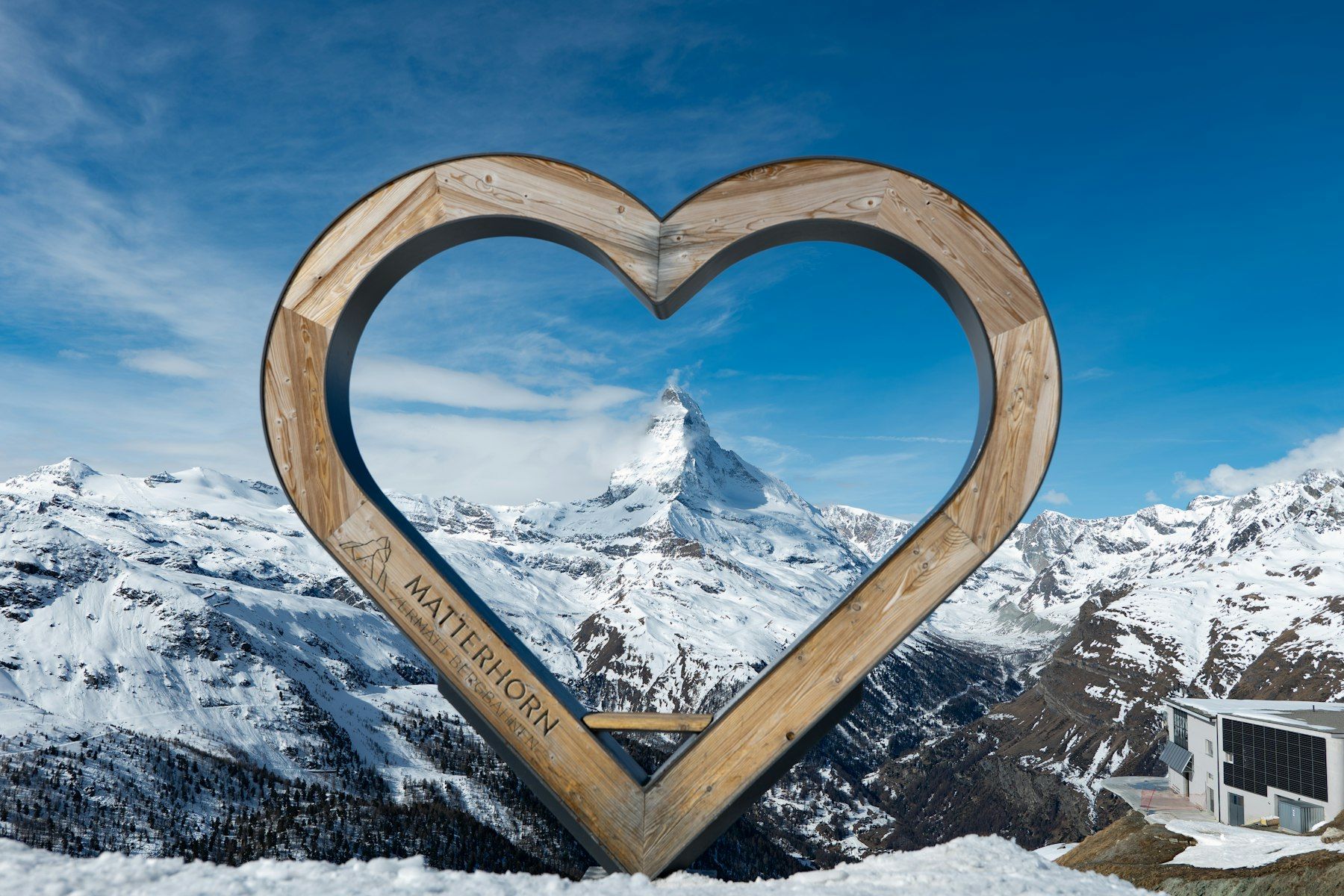
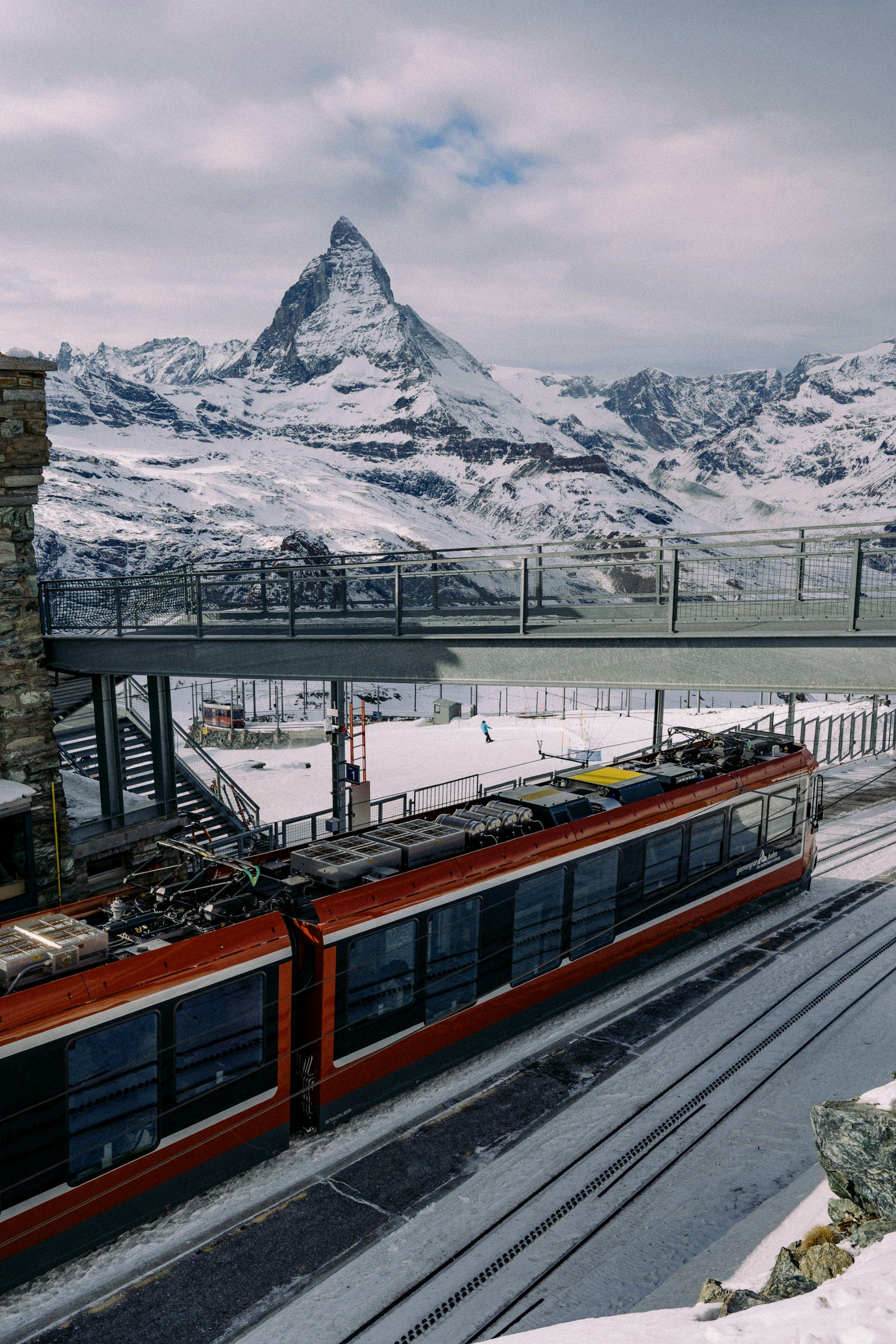
Ride the Gornergrat railway for the classic Matterhorn view, and stay for sunset or for the clear early morning light. For dinner in the village, fondue and rösti are the local order.
Day 7: Zermatt to Zurich
Allow about four hours by rail to Zurich airport, with a change at Visp or Bern, and leave a buffer of three hours for an international flight.
Honeymoon-specific tips
- Tell the hotel. Mention the honeymoon when you book; many hotels add a room upgrade, chocolate or champagne when they can. It is not guaranteed.
- Pick rooms with a view, not a bigger room. In Zermatt, a balcony facing the Matterhorn beats an extra 10 sq m.
- Choose one splurge dinner. A lakeside or mountain-top dinner for two costs CHF 150 or more; eating the rest of the week from supermarkets and bakeries keeps the budget on track.
- Book timed mountain tickets after you check the forecast. Switzerland’s weather is local, so keep Days 4 and 6 flexible by a day.
- Photographs. Ask the hotel about a viewpoint at sunrise, because the Matterhorn is clearest before cloud builds.
Vegetarian and Jain eating
Indian restaurants are common in Zurich, Lucerne and Interlaken, so search the day before and check opening hours. Swiss supermarkets such as Coop and Migros sell vegetarian meals, cheese, fruit and bread, which also makes picnic lunches cheap. Many Swiss dishes use bacon or meat stock, so ask. Jain travellers should carry dry snacks and ask kitchens for dishes without onion and garlic.
Best time to go
June to September is warm, with long evenings and every lift open, and it is the peak for prices. December to March gives snow villages and sledging, and Zermatt’s skiing. April to early May and late October are cheaper, but some lifts and hotels close for the off-season, so check timetables before you book.
Practical tips
- Money: Switzerland uses the Swiss franc, not the euro. Carry a forex or multi-currency card; cards are accepted almost everywhere, and UPI is not something to rely on.
- Transport: the SBB app shows timetables and sells tickets. Trains are punctual, and reserved seats on panoramic trains cost extra.
- SIM: an eSIM bought before you fly works on landing.
- Plugs: Switzerland uses Type J sockets at 230 V; Type C (two-pin Europlug) fits most, but pack a Swiss or universal adapter.
- Tap water: it is safe and excellent, so carry a bottle and save the CHF 4 a bottle.
- Tipping: service is included; rounding up is enough.
Related guides
Planning the visa for another European trip? Our Iceland guide covers the same Schengen process through VFS, and the UK guide covers the separate UK visa. For a warmer honeymoon, see the Malaysia honeymoon guide. For Rockies lakes and glaciers instead of the Alps, read the Banff and Jasper plan. To add a city trip on the same Schengen visa, see our Italy plan for Rome, Florence and Venice. For island sunsets on the same Schengen visa, see the Greece plan for Athens, Mykonos and Santorini. For a winter Schengen trip by rail, see the Germany Christmas markets plan. For fjords by train and boat on the same Schengen visa, see the Norway fjords plan. For palaces, coffee houses and an alpine lake village by train, see the Austria 7-day plan. More facts are on the Switzerland hub.
Frequently asked questions
How much does a Switzerland honeymoon cost from India?
Roughly ₹2,60,000 to ₹3,40,000 per person for 7 days, so ₹5.2 to ₹6.8 lakh for the couple. That covers flights, the Schengen visa, mid-range hotels, a rail pass, food, two mountain excursions and insurance. A hostel-style or self-catering trip can come nearer ₹2 lakh per person.
Do Indians need a visa for Switzerland?
Yes. Indian passport holders need a Schengen short-stay visa (type C) before travel. You apply through VFS Global in India, and the Swiss Embassy in New Delhi decides. The adult fee is €90 plus a VFS service charge of INR 2,690.
How long does a Swiss visa take from India?
VFS Global says processing is usually 15 calendar days from when the embassy receives a complete file, and can be longer. Applications can be lodged up to 180 days before travel and must be lodged at least 15 days before, so apply 6 to 8 weeks ahead to be safe.
How many days are enough for a Switzerland honeymoon?
Seven days is the minimum that covers Lucerne, the Jungfrau region and Zermatt without rushing. Five days works if you drop Zermatt. Ten days lets you add Lake Geneva, Montreux or a Glacier Express leg.
Is the Swiss Travel Pass worth it for a honeymoon?
Usually yes for a trip that moves between Lucerne, Interlaken and Zermatt, because it covers trains, many buses and boats, and gives discounts on mountain railways. Add up your own journeys on the SBB app first; for a base-in-one-town trip, point-to-point tickets can be cheaper.
Is Switzerland good for vegetarians and Jain travellers?
Yes, with some planning. Zurich, Lucerne, Interlaken and Zermatt all have Indian restaurants, and Swiss supermarkets sell cheese, bread, fruit and ready meals. Jain travellers should carry dry snacks and ask about onion and garlic in cooked dishes.
When is the best time to visit Switzerland for a honeymoon?
June to September is best for hiking, long evenings and open mountain lifts, and is also the most expensive. December to March suits couples who want snow. April, early May and late October are cheaper but some mountain lifts and hotels close.