Published 11 Oct 2026 · Updated 12 Oct 2026
Seven days is enough for the classic Norwegian fjord loop by public transport: Oslo, the Flåm railway, a cruise down the Nærøyfjord, and Bergen. You need a Schengen visa through VFS, and a budget of roughly ₹1.6 to ₹2.4 lakh per person, because Norway is expensive. No car is needed, and the trip mostly runs on one famous rail line and two boats.
Visa and entry rules for Indians
You need a Schengen short-stay (type C) visa. In India, Norway’s applications go through VFS Global. We checked that page on 11 October 2026.
- Fees: €90 for adults and €45 for children aged 6 to under 12, paid online through the UDI forms portal, plus a €8 VFS service fee. VFS charges are non-refundable.
- Processing: normally 15 days, and VFS says it can stretch to a maximum of 45 calendar days in cases that need more scrutiny.
- When to apply: up to six months before your trip, and no later than 15 calendar days before it. Don’t cut it that close: book your biometrics appointment 4 to 6 weeks ahead for summer travel.
- Documents: the application form, passport, photograph, biometrics and the visa fee, plus supporting documents under Article 14 of the Schengen Visa Code (typically bookings, proof of funds and employment or study papers). VFS also asks for travel medical insurance valid across the Schengen area for your whole stay, covering at least €30,000.
Norway’s immigration directorate (UDI) assesses whether your funds are sufficient case by case, so bring bank statements and paid or confirmed hotel bookings that match your itinerary.
Use only the VFS Global site and the UDI portal. Look-alike “Norway visa” sites charge large markups and can’t speed up the decision.
If your flight connects through another Schengen country (Amsterdam, Frankfurt, Helsinki), check that your visa covers your first entry into the Schengen area. A non-Schengen hub such as London can need its own transit visa.
What it costs in rupees
Per person, two people sharing a double room, travelling in summer, using trains and boats:
| Item | Approx. cost |
|---|---|
| Return flights to Oslo, back from Bergen (via a Gulf or EU hub) | ₹60,000 – ₹90,000 |
| Schengen visa, VFS fee, insurance | ₹11,000 – ₹13,000 |
| Oslo–Flåm–Nærøyfjord–Bergen trains, boat and bus | ₹16,000 – ₹25,000 |
| Hotels, 6 nights (half a double room) | ₹36,000 – ₹54,000 |
| Food: supermarket breakfasts and lunches, some café dinners | ₹25,000 – ₹38,000 |
| Funicular, museums, city transport | ₹9,000 – ₹15,000 |
| Total | ₹1,57,000 – ₹2,35,000 |
Norwegian kroner (NOK) trade at roughly ₹8.5 to ₹9, so check the day’s rate. Book the train and boat legs two to three months ahead: the cheapest fares go first in summer, and buying directly from Vy is the safest way to avoid reseller markups.
Day-by-day itinerary
Day 1: arrive in Oslo
Land, take the airport express train into the city, and keep the evening light. Walk the harbour and the Opera House roof, then eat in Grønland, Oslo’s multicultural district, where Indian and Pakistani restaurants are easy to find and cheaper than the centre.
Day 2: Oslo’s highlights
Spend the morning at Vigeland Park, then take the ferry to the Bygdøy peninsula for the Fram polar ship and the Kon-Tiki museum. Finish at Akershus Fortress for the harbour views. An Oslo public-transport day ticket is enough, so skip the sightseeing passes unless you’ll visit many museums.
Day 3: Oslo to Flåm by rail
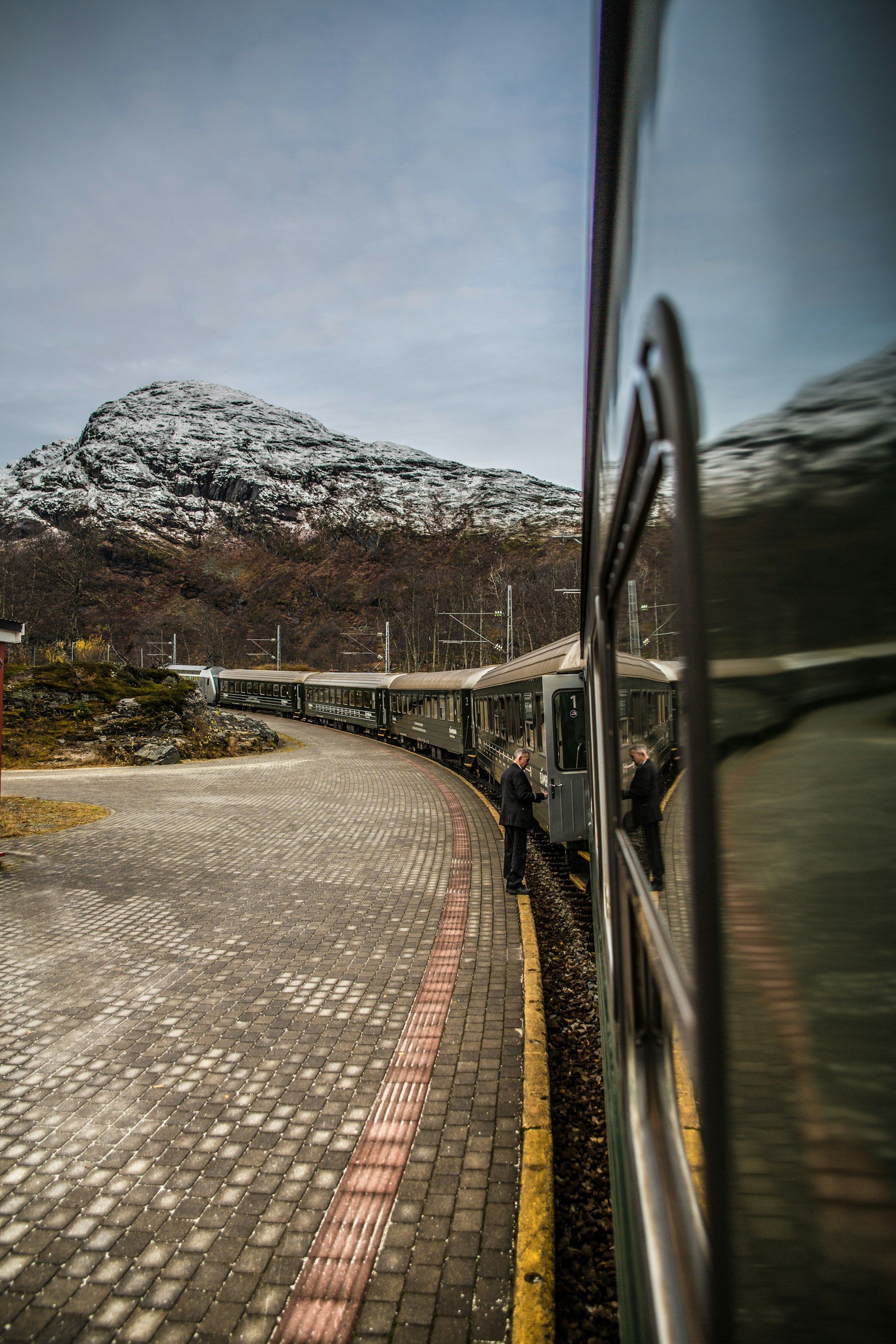
Take the early train from Oslo to Myrdal (about 5 hours), then change onto the Flåmsbana, a 20 km line that drops from the mountains to the fjord through tunnels and past waterfalls, in about an hour. Sleep in Flåm, a small village with a fjord-front brewery and a few good cafés.
Day 4: Nærøyfjord cruise and on to Bergen
Take the morning boat from Flåm to Gudvangen along the Nærøyfjord, a UNESCO World Heritage fjord with walls over 1,000 m high. A bus takes you to Voss and a train from there reaches Bergen in the evening. This is the “Norway in a Nutshell” route, and doing it yourself with separate tickets is usually much cheaper than the packaged tour.
Day 5: Bergen old town
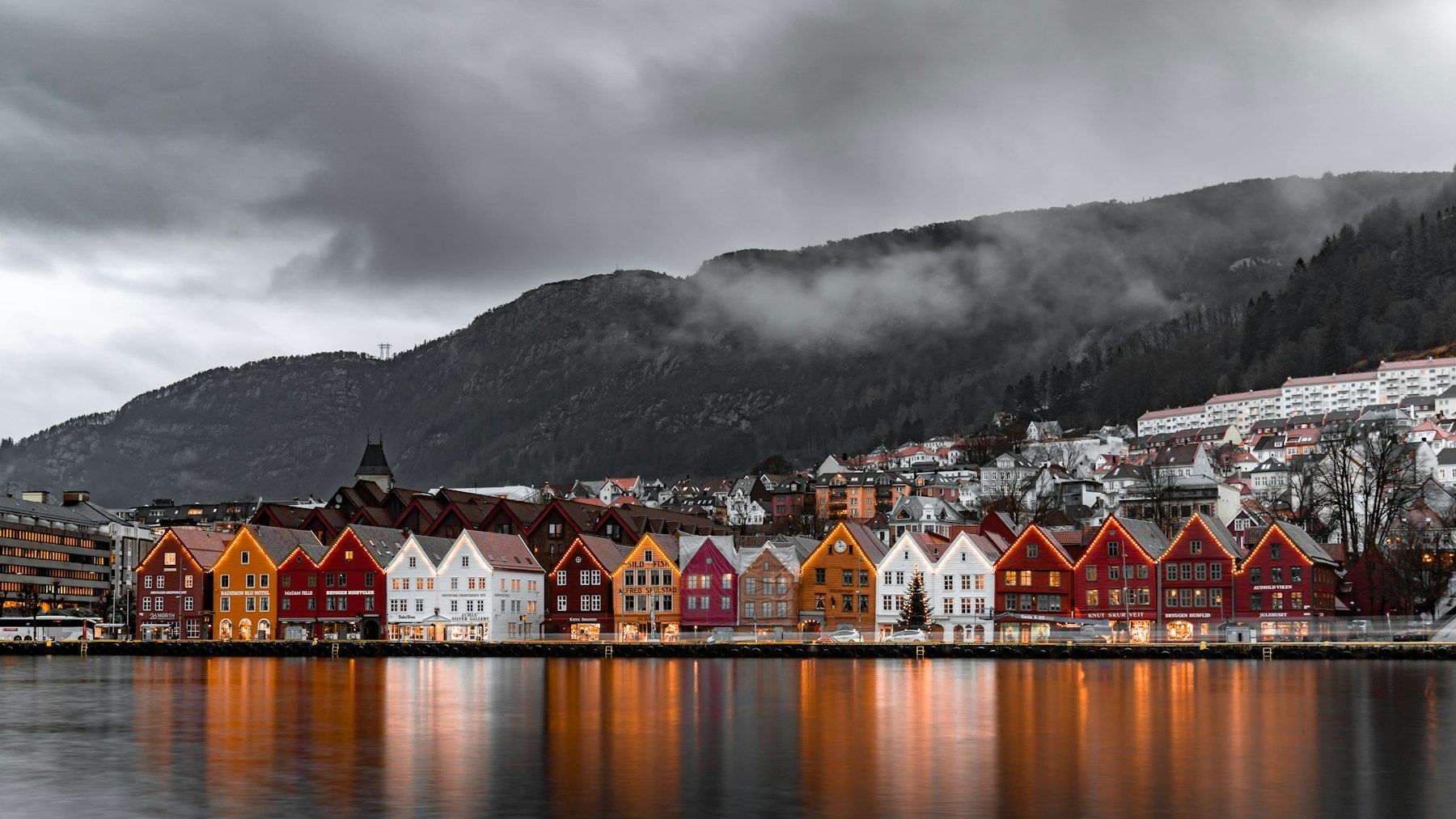
See the painted wooden houses of Bryggen (a UNESCO site), browse the fish market, and ride the Fløibanen funicular up to Mount Fløyen for the view over the harbour and islands. Bergen is rainy for much of the year, so bring a proper rain jacket.
Day 6: a Hardangerfjord day or slow Bergen
Choose one: a guided day trip to the Hardangerfjord (best in May, when the orchards bloom), or stay in Bergen for Mount Ulriken, the Hanseatic Museum and a long café lunch. If it’s dry, the hike up Fløyen is free.
Day 7: fly home
Bergen’s airport is a short light-rail ride from the centre. Because you flew in to Oslo and out of Bergen, you skip the 5-hour train back. Ask for an open-jaw fare when you price flights.
Best time to go
Late May to early September is the window. June and July have the longest days and the warmest weather, and also the highest prices. May is cheaper, with the waterfalls full and the fruit blossom in Hardanger. September is calmer, with autumn colours. Winter fjord trips are possible but short on daylight, and some boats and trains run reduced schedules.
Practical tips
- Money: cards everywhere, including buses and public toilets. Carry a forex card and tell your bank before you travel.
- Connectivity: buy an eSIM that works across Europe before you leave, since roaming is expensive.
- Plugs: type C/F sockets at 230 V, so one Europlug adapter covers it.
- Food: supermarkets such as Rema 1000 and Kiwi make breakfasts and picnics cheap. Tap water is safe and free. Vegetarian options are easy in cities, and fewer in small fjord villages, so check menus in Flåm.
- Alcohol: very expensive and sold in state shops, so don’t budget for much.
- Weather: pack layers even in July.
Where to go next
Norway rewards a first Schengen trip with scenery, but it is pricey, so compare it with other cold-country trips. Our Iceland week by car is a similar budget with a road trip instead of trains, and the Switzerland honeymoon itinerary covers another Schengen visa via VFS with scenic rail. For snow, huskies and the aurora in winter, see our Finland Lapland plan. Visa and entry details for the country are on the Norway page.
Frequently asked questions
Do Indians need a visa for Norway?
Yes, a Schengen short-stay (type C) visa. Norway's applications in India are lodged through VFS Global, with biometrics at a VFS centre. If Norway is your main or only Schengen destination, you apply for Norway's visa.
How much is the Norway visa fee from India?
VFS Global's India page for Norway lists €90 for adults and €45 for children aged 6 to under 12, paid online through the UDI forms portal, plus a €8 VFS service fee. Insurance of at least €30,000 valid across the Schengen area is also required.
How long does the Norway visa take for Indians?
VFS states a normal processing period of 15 days, extendable to a maximum of 45 calendar days in individual cases. You can apply up to six months ahead and no later than 15 calendar days before you travel, but apply at least a month early.
How much does a 7-day Norway trip cost from India?
About ₹1.57 to ₹2.35 lakh per person, including return flights, visa, trains, a fjord cruise, mid-range hotels (sharing a double room) and self-catered food with a few restaurant meals. Norway is one of the priciest places in Europe, so food and hotels set the range.
What is the best time to visit the Norwegian fjords?
Late May to early September: roads and boats run fully, days are long and the waterfalls are at their fullest in late spring and early summer. June and July are busiest and dearest; May and September are cheaper and quieter.
Can I use UPI in Norway?
Don't plan on it. Norway runs almost entirely on cards and phone payments, so carry a forex card or a Visa or Mastercard with international use enabled and keep a little cash only for emergencies.