Published 11 Oct 2026 · Updated 13 Oct 2026
A five-day Angkor Wat trip means one day to arrive, three days of temples on the three-day pass, and a morning to fly out. Indians need a US$30 tourist visa and the free e-Arrival card, and a mid-range trip costs roughly ₹63,000 to ₹99,000 per person.
Visa and entry rules for Indians
Indian ordinary passport holders need a visa for Cambodia. The Ministry of Tourism’s visa and passport page, which we checked on 11 October 2026 and which showed an update date of 11 September 2025, says the following:
- Tourist visa (type T): US$30, single entry, valid for one month (30 days).
- Where to get it: as an e-Visa at evisa.gov.kh before you travel, on arrival at Phnom Penh and Siem Reap airports and at land crossings from Thailand, Vietnam and Laos, or from a Cambodian embassy.
- Extension: once only, by up to one month, at the Immigration Department of the National Police.
- Passport: valid for at least six months, with one recent passport-sized photo.
- Exemption: the page’s table lists India as exempt for diplomatic and service passports only (60 days). Ordinary passports are marked as not exempt.
You also need the e-Arrival card, which replaces the paper immigration, health and customs forms for air travellers and has been required since 1 July 2024. The official site, arrival.gov.kh, describes it as one digital form covering the visa on arrival, immigration form, health declaration and customs declaration. It issues a QR code for the border. The Ministry page words the deadline inconsistently (“within 7 days” in one place, “at least 7 days” in another), so follow the instructions on the site itself.
The Ministry page also says that from 3 October 2026 Cambodian visa issuance is to become fully digital, with physical stickers discontinued, running alongside the e-Visa system. We could not confirm how this works in practice, so read the e-Visa site’s current instructions before you apply. We also could not open the official e-Visa pages to confirm a processing time, so apply at least a week before you fly.
Only use evisa.gov.kh. Look-alike sites charge extra for the same visa, and you do not need an agent.
What it costs in rupees
Per person, two sharing a room, mid-range, five days and four nights. These are our estimates at roughly ₹92 to the US dollar, so check the day’s rate. We could not verify current fares from official sources.
| Item | Approx. cost |
|---|---|
| Return flight, India to Siem Reap, one stop | ₹32,000 – ₹50,000 |
| Tourist visa, US$30 | ₹2,800 |
| 3-day Angkor pass, US$62 (as quoted) | ₹5,800 |
| Hotels, 4 nights (half the room cost) | ₹7,000 – ₹14,000 |
| Food, about US$15 – US$30 a day | ₹7,000 – ₹13,000 |
| Tuk-tuk or car with driver for 3 temple days | ₹2,800 – ₹4,800 |
| Kompong Khleang boat, a show, a massage | ₹3,000 – ₹5,000 |
| eSIM, travel insurance, tips | ₹2,500 – ₹3,500 |
| Total | ₹63,000 – ₹99,000 |
The low end takes a guesthouse with air conditioning, shares a tuk-tuk and eats at local restaurants. The high end adds a pool hotel near Pub Street, a private car with an English-speaking guide, and a pricier flight on a peak-season date.
Getting there from India
IndiGo launched a non-stop Kolkata to Siem Reap flight in November 2025, paused it from 3 July to 30 September 2026, and reports say it resumed on 1 October. Treat it as a bonus and check the airline site for your dates. From Delhi, Mumbai, Bengaluru, Chennai or Hyderabad, the usual route is one stop via Bangkok, Kuala Lumpur or Singapore, which takes roughly 8 to 14 hours door to door.
Siem Reap’s airport is a short ride from town. Book your hotel’s pickup or take a tuk-tuk. Land arrivals from Bangkok are possible but long, and not worth it on a five-day trip.
Which Angkor pass to buy
Angkor is one large archaeological park, and the pass is the one fixed cost you cannot negotiate. Guides quoted for 2026 give US$37 for one day, US$62 for three days and US$72 for seven days, in US dollars. We could not open the official Angkor Enterprise site to confirm these, and sources disagree about how long the three-day pass stays valid, so check there before you pay. Buy only from the official ticket office or site, and take your passport, since passes carry your photo and are checked at the gates.
For this itinerary the three-day pass is the right choice. One day forces you to choose between Angkor Wat and everything else.
Day-by-day itinerary
Day 1: arrive in Siem Reap
Land, clear immigration with your visa and e-Arrival QR code ready, and check in. Walk the Old Market and Pub Street area in the evening and sort out tomorrow’s tuk-tuk or car with your hotel. Passes are bought at the official ticket office, so ask your hotel where it is and when it opens.
Day 2: Angkor Wat, Angkor Thom and Ta Prohm
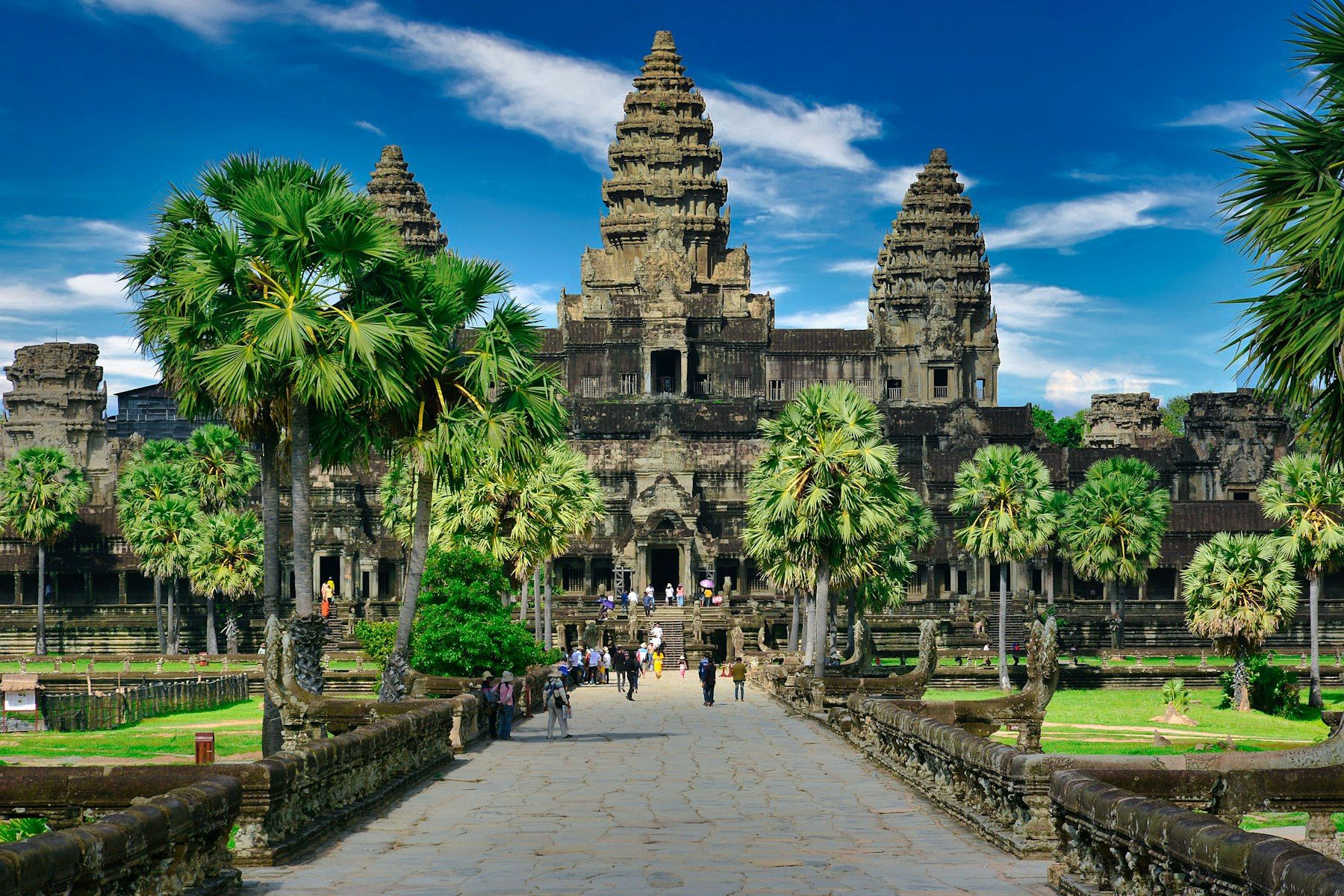
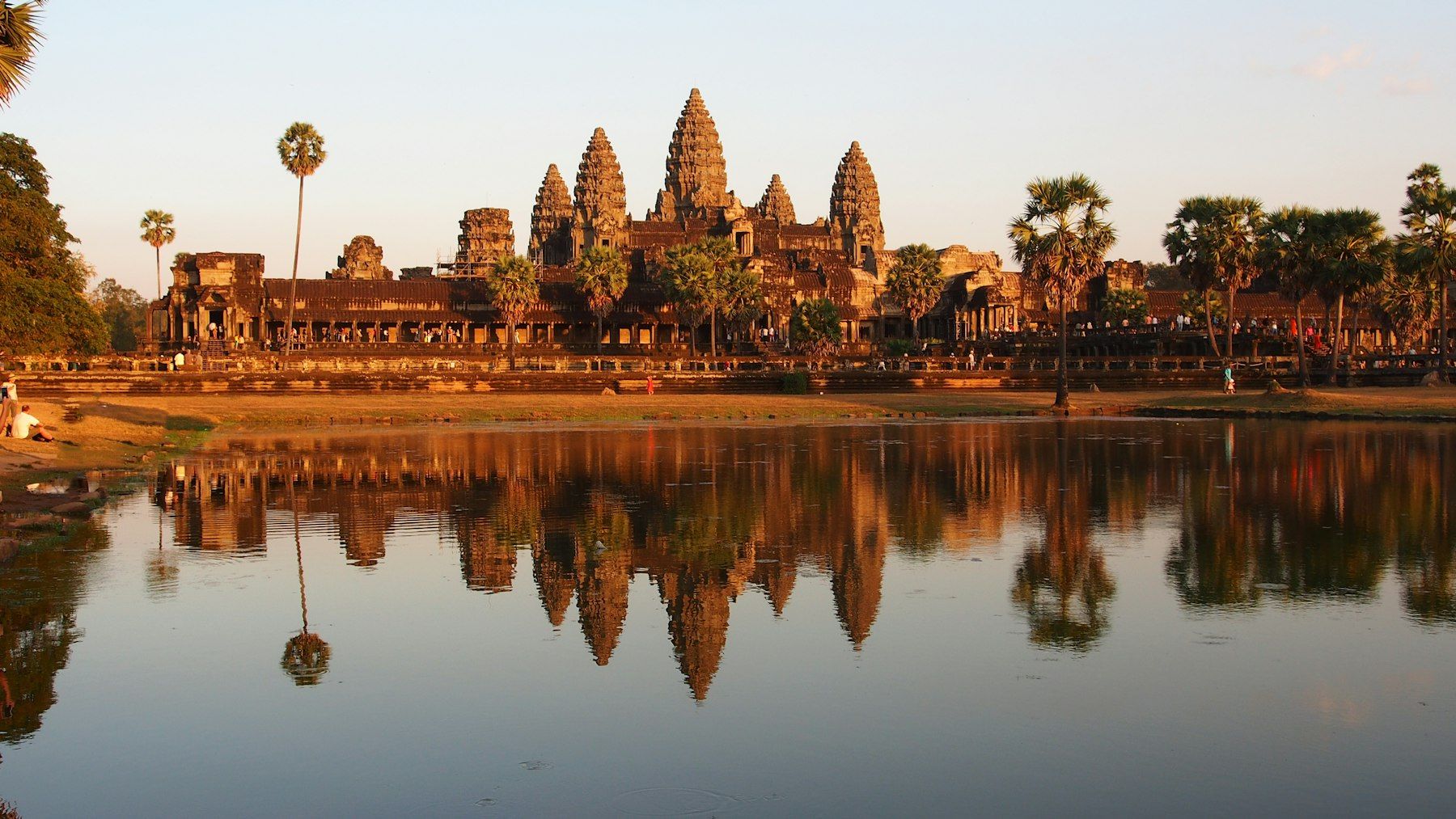
Start at Angkor Wat for sunrise or just after, when the courtyards are cooler and quieter. Climb to the central tower if the upper level is open, then go on to Angkor Thom: the South Gate, the Bayon with its carved faces, the Baphuon and the Terrace of the Elephants. Finish at Ta Prohm, where tree roots grow through the stonework. Break for lunch in the middle of the day and rest in your hotel pool.
Day 3: Banteay Srei and the outer temples
Hire a car or a tuk-tuk for the longer drive north-east to Banteay Srei, a small temple of pink sandstone with fine carving. On the way back stop at Banteay Samre, Pre Rup and East Mebon, or Preah Khan and Neak Pean on the Grand Circuit. This day has more driving than walking, so it suits parents and older travellers.
Day 4: Kompong Khleang and a slow evening
Use the morning for the Tonlé Sap lake. Kompong Khleang is a stilt-house village about an hour’s drive east of Siem Reap, quieter than the nearer floating villages, and you can take a boat during the wet season when the water is high. In the dry season the houses stand on tall stilts above dry ground. Come back for a cooking class, a massage, or a circus show in the evening, then eat at the Night Market.
Day 5: fly home
Most onward flights to Bangkok, Kuala Lumpur and Singapore leave in the morning or midday. Allow two hours at the airport, and keep a spare buffer if you have a tight connection onward to India.
Eating in Siem Reap as an Indian traveller
Cambodian cooking uses fish sauce and prahok (fermented fish paste) in many dishes. Vegetarians can ask for “no fish sauce, no meat stock” and order vegetable fried rice, tofu stir-fries, fresh spring rolls and morning glory stir-fry. Siem Reap has several Indian restaurants around the Old Market and Pub Street area, so dal and roti are easy to find, but check recent reviews for each place. Jain travellers should carry snacks for temple days.
Best time to go
November to March is cooler and dry, the best window for walking the temples, and also the busiest and priciest. April and May are very hot, with midday temperatures that make long temple walks hard. June to October is the rainy season: the sites are greener, quieter and cheaper, and rain often arrives in the afternoon, so do the temples early.
Practical tips
- Money: US dollars are used for most tourist prices, and you get riel as change. Carry small dollar notes, withdraw at ATMs in Siem Reap, and use a forex card for hotel bills. Do not count on UPI working at shops and tuk-tuks, so keep cash and a card as backup.
- Connectivity: buy an eSIM before you fly or a local SIM at the airport.
- Plugs: socket types vary between hotels, so carry a universal adapter.
- Dress: cover shoulders and knees at the temples, and wear shoes that grip worn stone.
- Heat: carry a litre of water per person, a hat and sunscreen, and plan temple visits for early morning and late afternoon.
- Drivers: agree the price and the route before you set off, and ask your hotel to arrange a tuk-tuk for the day.
Related guides
Many travellers combine Siem Reap with Bangkok, so see our Thailand 6-day guide. For a Mekong-region route that continues into Vietnam, see Vietnam in 8 days, or compare a beach week in the Palawan plan. To continue north into Laos by train, see the Laos 6-day itinerary. Entry rules and facts are collected on the Cambodia hub.
Frequently asked questions
Do Indians need a visa for Cambodia?
Yes. Cambodia's Ministry of Tourism visa page, which we checked on 11 October 2026, lists India's visa exemption only for diplomatic and service passports (60 days), not for ordinary passports. An ordinary-passport tourist visa costs US$30 and gives 30 days, and you can get it as an e-Visa online or on arrival at Siem Reap and Phnom Penh airports.
What is the Cambodia e-Arrival card?
It is a free online arrival form on arrival.gov.kh that combines the immigration form, health declaration and customs declaration, and you need it even if you hold a visa. You get a QR code to show at the border. The Ministry of Tourism page words the timing inconsistently, so follow the instructions on arrival.gov.kh and submit it in the days before you fly.
How many days do you need for Angkor Wat?
Three days on site is the sensible minimum for most visitors: day one for Angkor Wat, Angkor Thom and Ta Prohm, day two for the outer temples such as Banteay Srei, and day three for a slower round or sunrise. With a day to arrive and a day to leave, that makes five days in all.
How much does an Angkor pass cost?
Guides quoted for 2026 give US$37 for one day, US$62 for three days and US$72 for seven days, payable in US dollars. We could not open the official Angkor Enterprise ticket site to confirm, so check angkorenterprise.gov.kh before you go and buy only from the official ticket office or site.
How much does a Siem Reap trip cost from India?
Roughly ₹63,000 to ₹99,000 per person for five days, two sharing a room, mid-range. The return flight is the biggest swing: there is no non-stop from Delhi or Mumbai, so you connect via Bangkok, Kuala Lumpur or Singapore.
Is there a direct flight from India to Siem Reap?
IndiGo started Kolkata to Siem Reap flights in November 2025 and paused them from 3 July to 30 September 2026. Reports say they resumed on 1 October, but check the airline's site before you rely on it. From every other city you change planes.
What is the best time to visit Angkor Wat?
November to March is cooler and dry, and it is the best window. April and May are very hot, and June to October is the rainy season, when the temples are greener and quieter but afternoon downpours are common.
What should I wear at Angkor Wat?
Cover your shoulders and knees at the temples; guards can refuse entry to the upper levels of Angkor Wat otherwise. Carry a light scarf or sarong, wear shoes that grip worn stone steps, and take water, since the walking is in full sun.