Published 13 Oct 2026
Six days is enough to take the high-speed train through Laos’s three headline stops: Vientiane for the capital, Vang Vieng for the limestone karst and Luang Prabang for temples, waterfalls and the dawn alms round. Indians need a 30-day eVisa, and a mid-range trip costs roughly ₹65,000 to ₹1,03,000 per person.
Visa and entry rules for Indians
Indian passport holders need a visa for Laos, and the official eVisa is the simplest route. The government’s Lao eVisa portal, which we checked on 13 October 2026, says the following in its FAQ and information pages:
- Eligibility: India appears in the nationality list of the eVisa fee calculator. The portal states the eVisa is “available for these following countries” and links a separate list, which we could not read.
- Stay: the Stay Permit of an eVisa is 30 days, counted from the date you arrive. The approval letter’s validity only governs when you may enter.
- Entries: single entry only.
- Processing: “usually 03 working days” after you submit and pay. It can take longer if the application is incomplete, so apply at least a week before flying.
- Passport: an ordinary passport valid for more than 180 days from the date of arrival.
- Documents: a 4x6 cm photo taken within the last 6 months and a scan of the passport bio page that includes the two machine-readable lines.
- Fee: charged per applicant, excluding bank charges, and non-refundable under any circumstances, including refusal. The amount appears only inside the calculator once you select your nationality, and we could not read it, so we have not quoted it.
- Where it works: nine checkpoints, including Wattay International Airport in Vientiane, Luang Prabang International Airport, the Lao-Thai Friendship Bridges, and the Boten and Khamsavath railway stations on the Laos-China line. At any other port you must apply for a visa on arrival, and the eVisa fee is not refunded.
The FAQ does not mention hotel bookings or onward tickets, but immigration officers can ask for a return ticket, so carry yours. The portal also notes that you can use a special eVisa lane at the airport. Use only laoevisa.gov.la. Look-alike sites charge extra for the same document.
What it costs in rupees
Per person, two sharing a room, mid-range, six days and five nights. These are our estimates, not quoted fares, and the visa line is a placeholder because we could not read the official fee. Check the day’s exchange rate and live fares.
| Item | Approx. cost |
|---|---|
| Return flight, India to Vientiane, one stop | ₹34,000 – ₹52,000 |
| eVisa (placeholder; check the official calc) | ₹4,500 |
| Hotels, 5 nights (half the room cost) | ₹8,000 – ₹16,000 |
| Food, about ₹1,300 – ₹2,300 a day | ₹8,000 – ₹14,000 |
| Train legs (3) and airport/station transfers | ₹3,500 – ₹5,500 |
| Kuang Si, boat to Pak Ou, tuk-tuks, activities | ₹4,000 – ₹7,000 |
| eSIM, travel insurance, tips | ₹3,000 – ₹4,000 |
| Total | ₹65,000 – ₹1,03,000 |
The low end takes guesthouses with air conditioning, second-class train seats and local restaurants. The high end adds a riverside boutique hotel in Luang Prabang, a private car for Kuang Si and a pricier flight in the November to January peak.
Getting there and moving around
We found no non-stop flight from India to Laos, so expect one stop via Bangkok, Hanoi or Kuala Lumpur, roughly 9 to 14 hours door to door. Fly into Vientiane and out of Luang Prabang (or the reverse) so you never backtrack. Ask for an open-jaw ticket, which is often priced close to a return into one city.
The Laos-China Railway is the reason this route works. It runs from Vientiane through Vang Vieng to Luang Prabang, and the trains are quick, around two hours end to end by most reports, so check the operator’s timetable. Stations are some distance from the old towns, so budget for a tuk-tuk or shared van at each end. Book seats in advance during November to February, carry your passport since tickets are checked against it, and keep an hour spare on either side of the train.
Day-by-day itinerary
Day 1: arrive in Vientiane
Land, clear immigration with your eVisa printed or saved offline, and check in near the Mekong. Walk the riverside in the late afternoon, then see the gold stupa of Pha That Luang as it catches the evening light. Eat at the night market along the river.
Day 2: Vientiane to Vang Vieng
Spend the morning at Patuxai, the monument modelled on Paris’s Arc de Triomphe, and the temple of Wat Si Saket. Take an early-afternoon train to Vang Vieng and settle in. Watch the sunset over the Nam Song river with the karst ridges behind it.
Day 3: Vang Vieng’s karst and caves
Hire a bicycle or scooter if you are comfortable on rough roads, or book a tuk-tuk for the day. Visit the Tham Chang cave, swim at the Blue Lagoon and take a kayak or tube trip down the river, when the water is calm. Climb to a viewpoint in the late afternoon if your knees are up for it.
Day 4: train to Luang Prabang
Take a morning train north. Check in, then climb Phousi hill for the sunset view over the Mekong, and walk through the night market on Sisavangvong Road. Luang Prabang’s old town is a UNESCO World Heritage Site, and everything is walkable.
Day 5: alms, Kuang Si and the river
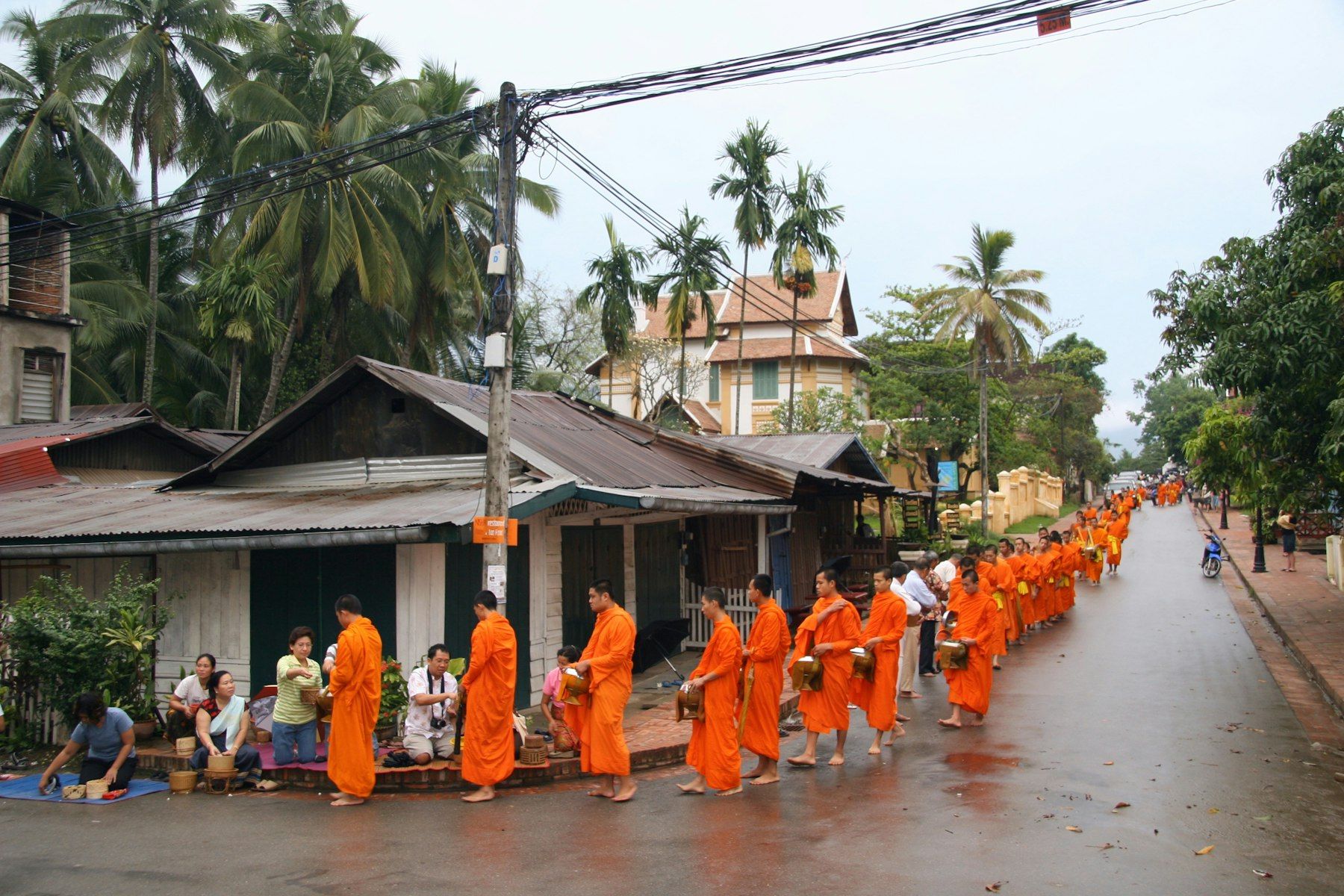
Wake before sunrise for the monks’ alms procession. Watch from a respectful distance, stay quiet, keep the flash off and do not buy rice from touts on the pavement who sell it for tourist use. Then go south by tuk-tuk or minivan to the Kuang Si waterfalls, with their turquoise pools, and swim where it is permitted. Return in the afternoon for the temples of Wat Xieng Thong and a slow Mekong sunset cruise.
Day 6: fly out
Take a morning flight from Luang Prabang to your connecting hub. Arrive two hours early, since the terminal is small.
Eating in Laos as an Indian traveller
Lao cooking uses sticky rice, herbs, chilli and fish sauce. Vegetarians should ask for “no fish sauce, no meat stock”, order vegetable stir-fries, tofu, sticky rice with jaew (dipping sauce, check it for fish), fresh spring rolls and mango sticky rice. Vientiane and Vang Vieng have several Indian restaurants, and Luang Prabang has a few, so dal and roti are easy to find. Jain travellers should carry packaged snacks.
Best time to go
November to February is cool, dry and clear, with chilly mornings in Luang Prabang, so pack a light jacket. March and April are hot and the northern valleys get smoky from burning, which affects views. Pi Mai Lao, the New Year water festival in mid-April, is fun but books out hotels. May to October is the rainy season: greener, cheaper and quieter, but some rivers and roads become unreliable.
Practical tips
- Money: the currency is the Lao kip, and prices run into the hundreds of thousands. Carry small US dollars as a backup, use ATMs in towns, and keep cash for markets. Do not count on UPI.
- Connectivity: buy an eSIM before you fly, or a local SIM at the airport.
- Plugs: socket types vary, so carry a universal adapter.
- Dress: cover shoulders and knees at temples, and remove shoes before entering.
- Water: drink bottled water and avoid ice from street stalls.
- Safety: swim only where locals do, and skip any unmarked tubing stretch after heavy rain.
Related guides
Laos pairs well with the temples of Cambodia, so see our Angkor Wat 5-day plan. For another Mekong-region route with limestone scenery, see Vietnam in 8 days, or route through Bangkok with the Thailand 6-day guide. Entry rules and facts are collected on the Laos hub.
Frequently asked questions
Do Indians need a visa for Laos?
Yes. India appears in the nationality list of the official Lao eVisa fee calculator at laoevisa.gov.la, which we checked on 13 October 2026. The eVisa allows a 30-day stay on a single entry, is usually processed in 3 working days, and needs a passport valid for more than 180 days from arrival.
How much is the Laos eVisa for Indians?
The fee is per applicant, excludes bank charges and is non-refundable, but the official calculator shows the amount only after you pick your nationality, and we could not read it from outside the application. Open the calculator on laoevisa.gov.la and pay only there. We have budgeted ₹4,500 as a placeholder in the cost table.
How many days are enough for Laos?
Six days covers Vientiane, Vang Vieng and Luang Prabang comfortably because the high-speed railway links all three in about two hours end to end. With 4 days you can do Vientiane and Luang Prabang only; with 8 you can add Kuang Si, the Pak Ou caves and the Plain of Jars region.
Is there a direct flight from India to Laos?
We found no non-stop flight from India to Vientiane or Luang Prabang, so plan one stop, usually via Bangkok, Hanoi or Kuala Lumpur. Check the airline sites for your dates, since routes change often, and book the whole journey on one ticket so a missed connection is rebooked for you.
What is the best time to visit Laos?
November to February is cool and dry and is the best window. March and April bring heat and, in the north, smoke haze from field burning, and May to October is the rainy season with greener scenery, cheaper rooms and some road and river disruption.
Is Laos good for vegetarian Indian travellers?
It is workable. Lao food leans on fish sauce, sticky rice and grilled meat, but Luang Prabang's evening buffet stalls and most restaurants will make vegetable dishes and tofu, and Vientiane and Vang Vieng have Indian restaurants. Say 'no fish sauce' and 'no meat stock' when you order, and carry snacks for train days.
Can you use UPI or Indian cards in Laos?
Do not rely on UPI. Carry some US dollars and a forex card, and withdraw kip from ATMs in Vientiane and Luang Prabang. Small guesthouses, night markets and tuk-tuk drivers are cash-only.