Published 10 Oct 2026
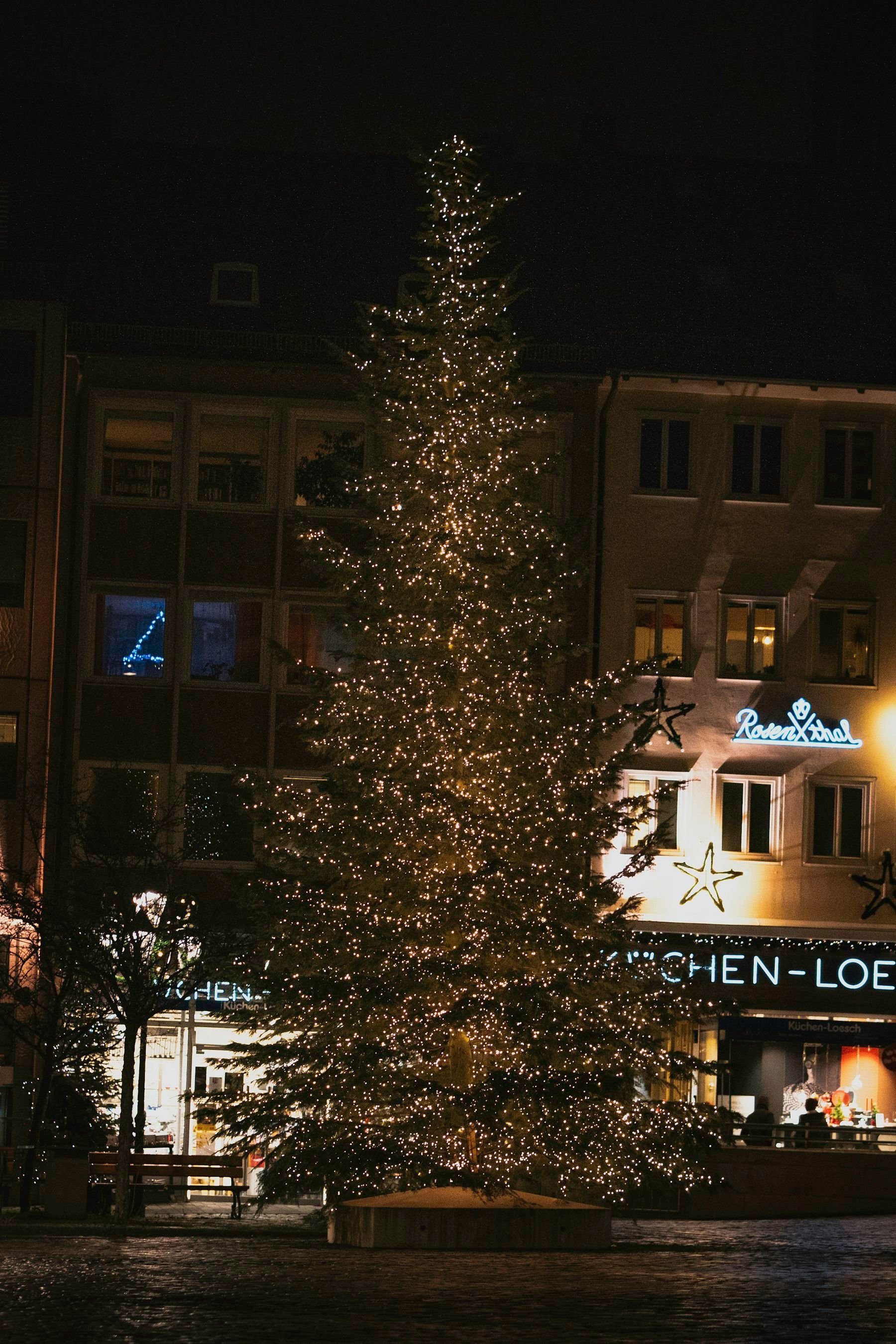
Seven days is enough for the best German Christmas markets: Cologne, Nuremberg and Munich, joined by fast trains, with a day in Rothenburg. Budget about ₹1,55,000 to ₹2,15,000 per person, and lodge the Schengen visa application at least six weeks before you fly.
Visa and entry rules for Indians
Indian passport holders need a Schengen visa for Germany. The relevant visa is the short-stay type C, which allows up to 90 days in any 180 across the Schengen area. We checked the European Commission’s page on applying for a Schengen visa on 10 October 2026. We could not open the German Embassy’s own page in New Delhi on that date, so confirm the Germany-specific points on the embassy’s visa page and the VFS Global Germany page before you pay.
- Fee: €90 for an adult and €45 for ages 6 to 12, according to the Commission. A VFS service centre adds its own charge, whose current figure is on the VFS Germany page.
- Timing: apply at least 15 days before travel and no more than six months ahead. You may need an appointment first.
- Processing: usually 15 days, and up to 45 if the file needs closer review or more documents. Peak winter weeks are busy, so apply 6 to 8 weeks before you fly.
- Documents: a passport valid for at least three months after you leave the Schengen area, the application form, a photo that meets ICAO standards, travel medical insurance, and papers on the purpose of the trip, your finances, accommodation and plans to return. Fingerprints are taken when you submit.
- Insurance: the policy must cover emergency medical care, hospitalisation and repatriation. VFS documents for other Schengen countries ask for at least €30,000 of cover, and Indian consulates ask for an approved insurer, so buy the policy before you lodge, with dates matching your trip.
- Where to apply: Germany is the country where you spend the most nights on this plan, so it is the one that decides your file. The embassy’s short-stay applications go through VFS Global; the embassy has said that a slot can be booked at any VFS centre in India, though check that this still applies.
Book flights and hotels as refundable until the visa is issued. Apply only through the German Embassy’s service provider VFS Global. Look-alike “Germany visa” sites add large fees, and no official page we checked mentions a separate German arrival card for tourists.
What it costs in rupees
Per person, sharing a double room, mid-range, 7 days and 6 nights. Euros are converted at roughly ₹100; this is our estimate, not a quote. Hotel rates are for the market weeks, when rooms in the old towns cost a third more than in spring.
| Item | Approx. cost |
|---|---|
| Return flight, Delhi or Mumbai to Frankfurt, back from Munich | ₹55,000 – ₹80,000 |
| Schengen visa (€90 plus the VFS service charge) | ₹12,000 |
| Hotels, 6 nights, half a double room (€55 – 75 each night) | ₹33,000 – ₹45,000 |
| Food, about €35 – 50 a day (market snacks, one sit-down meal) | ₹25,000 – ₹35,000 |
| Intercity trains booked in advance, plus local transport | ₹20,000 – ₹26,000 |
| Entry fees, mulled-wine mugs and market treats | ₹6,000 – ₹10,000 |
| Travel insurance, eSIM, small extras | ₹5,000 – ₹8,000 |
| Total | ₹1,55,000 – ₹2,15,000 |
The big levers are the flight date and the train fares. Fly Delhi or Mumbai to Frankfurt on a weekday in the first week of December, and book the Deutsche Bahn saver fares (Sparpreis) on the DB site or app as soon as the timetable opens, three to six months ahead. A flexible ticket on the same ICE can cost double.
Day-by-day itinerary
This plan flies into Frankfurt and out of Munich, so you never backtrack. Check the opening dates of every market before you book, because they differ by a week or two.
Day 1: arrive in Frankfurt, train to Cologne
Morning flights land in Frankfurt. Take the ICE from the airport station to Cologne in about an hour. Drop your bags near the cathedral and walk the old town at dusk.
Day 2: Cologne
Spend the day around the Cologne Cathedral and its market, then walk to the markets at Alter Markt and Neumarkt. Climb the cathedral’s south tower in the morning, before the crowds.
Day 3: Cologne to Nuremberg
Take the ICE to Nuremberg, about three hours with a change in some timetables. Check in, then take an evening walk up to the castle, with the lit rooftops of the old town below.
Day 4: Nuremberg Christkindlesmarkt
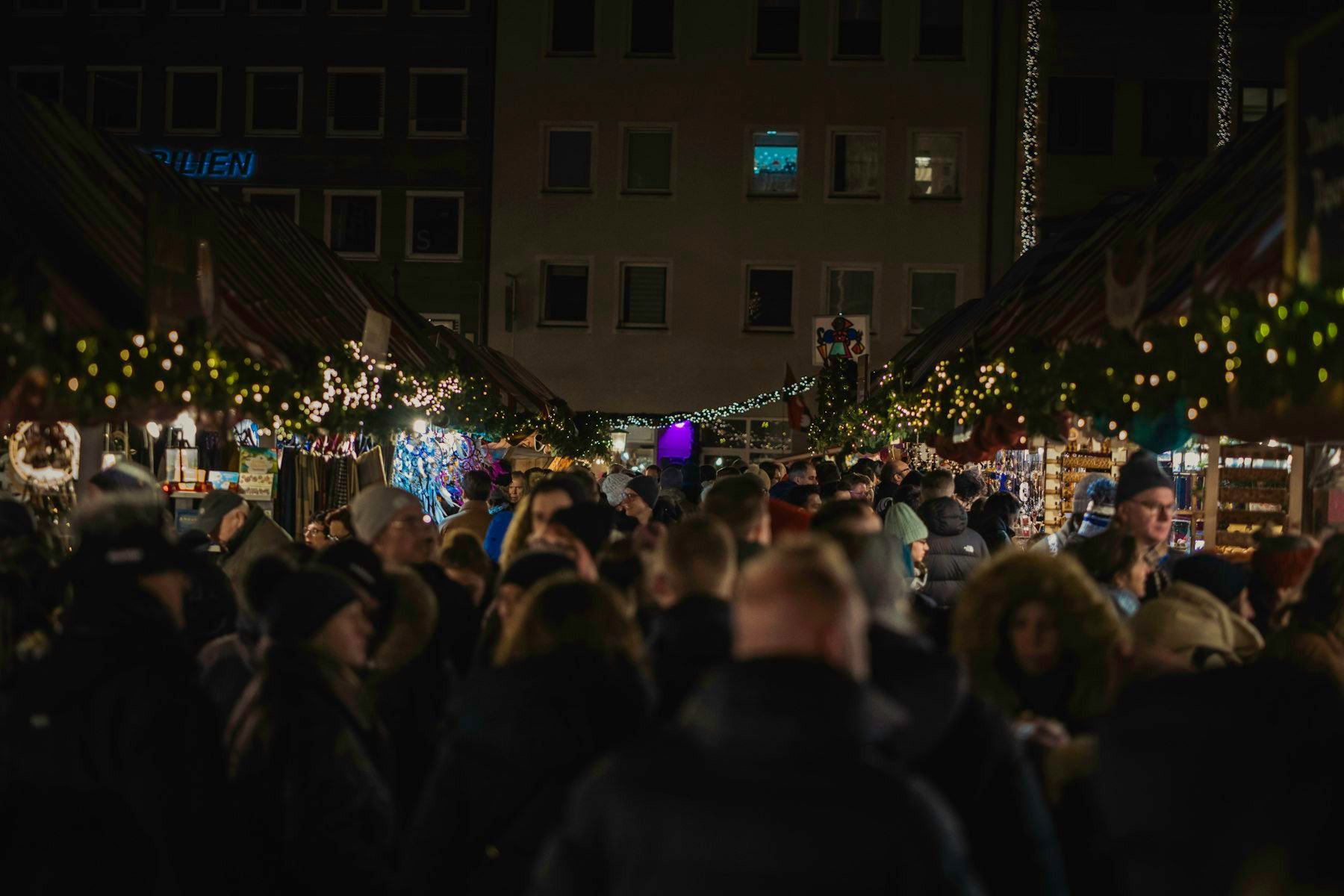
The Christkindlesmarkt on the Hauptmarkt is the best-known market in Germany. According to its organisers it runs from 27 November to 24 December 2026, daily from 10 am to 9 pm. Look for the gingerbread (Lebkuchen) and the dried-fruit “plum people”. Walk the Kinderweihnacht in front of the Frauenkirche, then up to the Kaiserburg for the view.
Day 5: Rothenburg ob der Tauber, on to Munich
Take a morning train to Rothenburg ob der Tauber, a walled medieval town, with a change at Steinach. Walk the town wall, visit the Christmas shops, then continue to Munich in the afternoon. Leave bags at the station lockers if the connections are tight.
Day 6: Munich Christkindlmarkt
The Münchner Christkindlmarkt at Marienplatz runs from 20 November to 24 December 2026, according to the city. Add the Kripperlmarkt at the Alter Peter, where nativity scenes are sold during the same hours. In the afternoon, step into the Residenz for the warmth and the courtyard lights.
Day 7: Munich, fly home
Take the S-Bahn to Munich airport, and leave a buffer of three hours for an international flight. If your flight is late in the day, spend the morning at the Viktualienmarkt.
Eating at the markets, vegetarian and Jain
Stalls sell sausage and roast meat first, but the vegetarian options are good: Kartoffelpuffer (potato pancakes with apple sauce), pretzels, roasted chestnuts, waffles, cheese Käsespätzle and Flammkuchen with cheese. Mulled wine (Glühwein) is the standard drink, and a non-alcoholic “Kinderpunsch” is on most stalls. Ask stall staff about gelatine in sweets and meat stock in soups. For lunch, search the day before for the nearest Indian restaurant; Cologne, Frankfurt and Munich have many. Jain travellers should carry dry snacks and ask for dishes without onion and garlic.
How the mug deposit works
Most stalls serve Glühwein in a collectable ceramic mug and add a deposit (Pfand), usually a few euros, which you get back when you return the mug to any stall of that vendor. Keep the mug as a souvenir and you lose the deposit. A mulled wine is typically €4 to €6; check the board before you order.
Best time to go
Early December is the sweet spot: every market is open and the weather is cold but usually dry. The last week before Christmas is the most crowded, and most markets close on 24 December. If you prefer quieter days, go on weekday afternoons, and book hotels for Nuremberg and Cologne at least two months ahead. Outside the market weeks, May to September is warmer and cheaper, but you will miss the lights.
Practical tips
- Money: Germany uses the euro. Market stalls and many small shops prefer cash, so carry some euros alongside a forex card. UPI is not something to rely on.
- Transport: the DB Navigator app sells tickets and shows platforms. Regional trains can be cancelled in winter, so check before the last connection.
- SIM: an eSIM bought before you fly works on landing.
- Plugs: Germany uses Type F sockets at 230 V; the two-pin Type C plug fits most.
- Shops: most shops are closed on Sundays, so plan food and laundry on Saturday.
- Cold: the sun sets by about 4:30 pm in December. Plan indoor stops, like a museum or a café, between market walks.
Related guides
Planning the Schengen paperwork for another trip? Our Switzerland honeymoon guide covers the same visa through VFS, and the Italy plan for Rome, Florence and Venice shows a longer Schengen itinerary. For a different winter trip, read the Iceland guide. More facts are on the Germany hub.
Frequently asked questions
How much does a Germany Christmas markets trip cost from India?
Roughly ₹1,55,000 to ₹2,15,000 per person for 7 days, with flights, the Schengen visa, mid-range hotels, intercity trains, food and insurance. Hotel prices rise in the weeks the markets run, so book early. A trip based in one city with day trips can come closer to ₹1.3 lakh.
Do Indians need a visa for Germany?
Yes. Indian passport holders need a Schengen short-stay visa (type C). The adult fee is €90 plus a VFS Global service charge, you apply at least 15 days before travel, and you can apply up to six months ahead. Apply for the country where you will spend the most nights.
When do the German Christmas markets open in 2026?
Nuremberg's Christkindlesmarkt runs from 27 November to 24 December 2026, and Munich's Christkindlmarkt at Marienplatz from 20 November to 24 December 2026, according to the organisers. Cologne and Frankfurt open in the second half of November, so check their official sites for exact dates before you book.
What is the best week to go for the markets?
The first two weeks of December are the usual pick: every market is open, the fairy lights are all lit and it is not yet Christmas-week crowded. Weekday afternoons are quieter than weekend evenings, when the main squares fill up.
Can vegetarians eat at German Christmas markets?
Yes, with some looking. Look for Kartoffelpuffer or Reibekuchen (potato pancakes with apple sauce), pretzels, roasted chestnuts, waffles, Käsespätzle and Flammkuchen with cheese. Much of the other food is sausage or meat, and some soups and pastries use meat stock or gelatine, so ask. Jain travellers should carry dry snacks.
How cold is Germany in December and what should I pack?
Expect about 0 to 5 °C in the day and below freezing at night, with dark skies by about 4:30 pm. Pack thermals, a down jacket, gloves, a hat and waterproof shoes with grip. Stalls are outdoors, so you will stand still more than you expect.