Published 13 Oct 2026 · Updated 13 Oct 2026
Bulgaria is one of the cheapest places to use a Schengen visa: six days covering Sofia, Rila Monastery and Plovdiv comes to roughly ₹95,000 to ₹1.35 lakh per person including flights, and the visa is the one big fixed cost. It is on the euro since January 2026, but day-to-day prices are still well below Paris or Vienna.
Visa and entry rules for Indians
Indian passport holders need a Schengen short-stay visa (type C) for tourism in Bulgaria, applied for in advance. We checked the VFS Global Bulgaria India page on 13 October 2026. It did not name application centres in the part we could read, so find your city on the VFS site when booking. The points below are VFS’s:
- Fee: INR 9,900 for adults, and applicants aged 12 and under are not required to pay. Visa fees are non-refundable if the visa is refused.
- VFS service charge: INR 2,530 including GST. Courier, SMS and photographs are optional extras.
- When to apply: no more than 3 months before departure and at least 15 calendar days before. Later applications may not be finished in time.
- Processing: up to 15 calendar days after receipt, extendable to 30 or 60 days in some cases.
- Passport: valid at least three months after you leave Bulgaria, issued within the previous 10 years, with at least two blank pages back to back.
- Insurance: medical cover of at least €30,000 valid for the whole stay, from an insurer on the approved list the VFS page links to.
- Money: for tourism, proof of funds of at least €50 per day of stay and no less than €500, or proof of prepaid tourist services. VFS also asks for three months of bank statements and three years of income tax returns with ITR-V acknowledgments.
- First-time applicants: if it is your first Bulgaria or Schengen application, you apply in person. Later trips can use a representative with an authorisation letter.
The embassy may ask for more documents or call you for an interview, and the VFS checklist can change, so read it again before you book an appointment. A Bulgaria visa covers the rest of the Schengen area on the same terms, so the process is the one in our Hungary plan and Lithuania plan. Facts for Bulgaria are on the Bulgaria hub.
Apply only through VFS Global’s Bulgaria pages and the embassy. Look-alike “Bulgaria visa” sites charge large fees for the same appointment. Book flights on a refundable or flexible fare until the visa is in hand.
What it costs in rupees
Per person, sharing a mid-range double room, for six days (five nights). These are our estimates for typical fares and rates, and they swing with season. One euro is roughly ₹100 to ₹110, so check the day’s rate.
| Item | Approx. cost |
|---|---|
| Return flights Delhi or Mumbai, one stop | ₹50,000 – ₹70,000 |
| Visa fee (INR 9,900) plus VFS charge (₹2,530) | about ₹12,400 |
| Hotels, 5 nights (half a €45–70 room) | ₹11,000 – ₹18,000 |
| Food, about €22–30 a day | ₹13,000 – ₹18,000 |
| Buses, trains, Sofia metro and taxis | ₹4,000 – ₹6,000 |
| Attractions (museums, Roman sites, Rila) | ₹2,500 – ₹4,000 |
| Travel insurance, eSIM, small extras | ₹4,000 – ₹6,000 |
| Total | ₹95,000 – ₹1.35 lakh |
Flights are the swing factor. There are generally no direct flights from India, so you connect through Istanbul, a Gulf hub or a European city, and fares rise in June to August and over Christmas. On the ground Bulgaria is cheaper than Hungary or Greece.
Day-by-day itinerary
Day 1: arrive in Sofia
From the airport the metro reaches the city centre in about half an hour. Drop your bags near Serdika, where Roman walls sit inside a metro station, then walk to the Alexander Nevsky Cathedral, with its gold domes. The streets around Vitosha Boulevard are the place for a first dinner.
Day 2: Rila Monastery
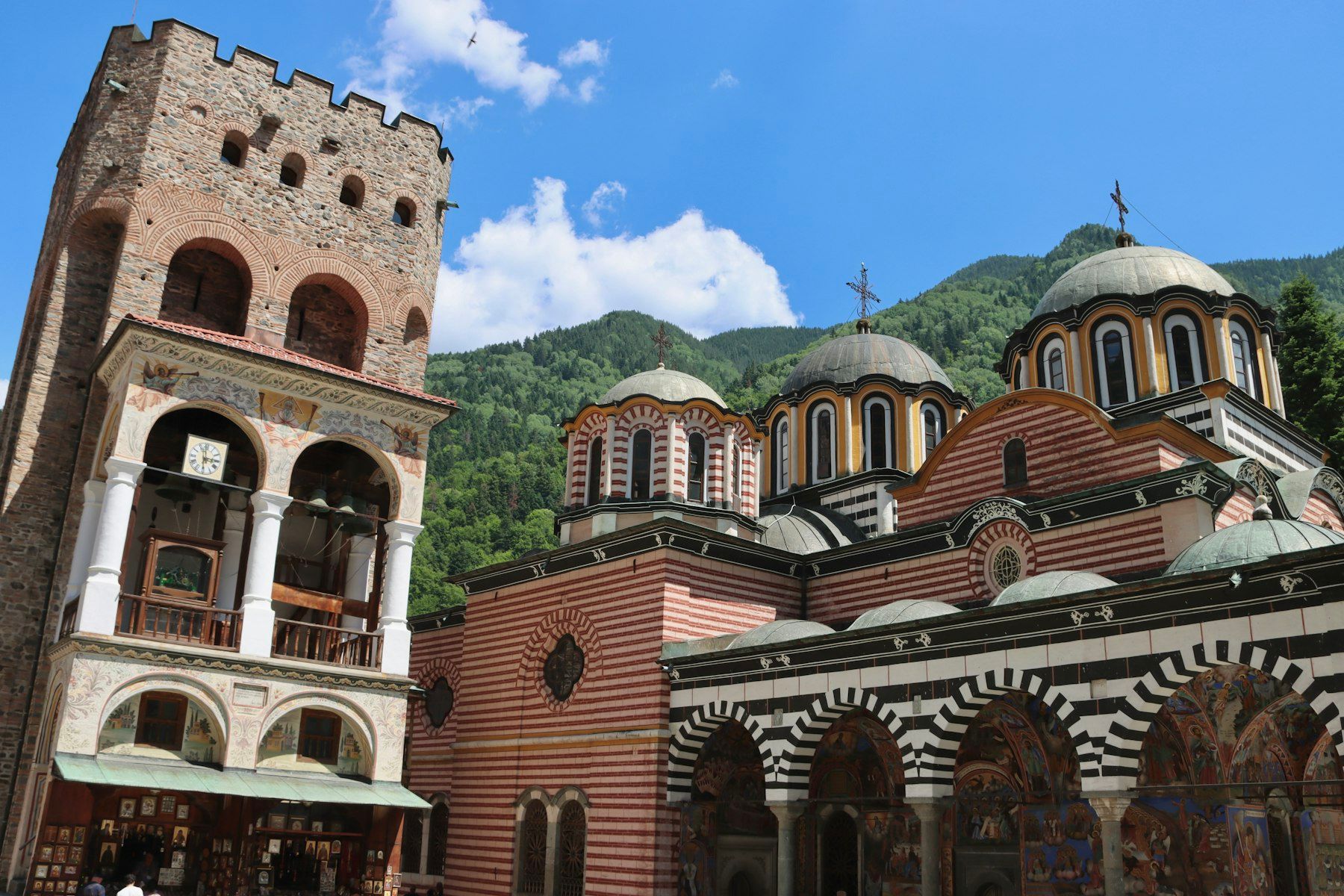
Go early. Rila Monastery is in the mountains south of Sofia, roughly two to two and a half hours each way by road, by a tour from Sofia or a public bus. Walk through the arches into the courtyard to see the striped facade and the frescoed church of the Nativity of the Virgin. Entry to the grounds and church is free and the small history museum charges a few euros, usually in cash. Cover your shoulders and knees. Bring a layer, because it is cool at altitude even in summer.
Day 3: Sofia to Plovdiv
Take a morning bus or train to Plovdiv, about two to two and a half hours away. Check in near the old town and walk up the cobbled lanes of Old Plovdiv, with its Revival-era houses in bright colours. The Roman theatre, still used for concerts, looks over the city. Stay for sunset on the hill, then eat in Kapana, the creative quarter.
Day 4: Plovdiv and Bachkovo Monastery
Spend the morning on the pedestrian main street, and the remains of the Roman stadium under it. In the afternoon take a taxi or bus to Bachkovo Monastery, about 30 km south, the country’s second-largest monastery, for its frescoes and the Rhodope foothills. Return to Plovdiv for the night.
Day 5: back to Sofia
Return to Sofia by bus or train. Visit the National Archaeological Museum or the Boyana Church on the city’s edge, a small medieval church with a UNESCO-listed set of frescoes. The Vitosha mountain is a short taxi ride away if you have energy and clear weather.
Day 6: fly home
Allow three hours before an international flight. The metro to the airport is the cheapest route, a taxi booked through an app is safer than one hailed at the kerb.
Bulgaria for vegetarians and Jain travellers
Bulgarian menus lean toward meat, but vegetarians do well. Look for shopska salad (tomato, cucumber and white cheese), banitsa (a flaky cheese pastry sold at every bakery), tarator (cold yoghurt and cucumber soup), grilled vegetables, bean stew and mish-mash, an egg and pepper dish. Ask whether soups and beans are made with meat stock or lard. Jain travellers will find onion and garlic in nearly everything, so carry dry snacks and use an apartment kitchen for a few meals. Sofia and Plovdiv both have vegetarian and vegan cafés.
Best time to go
May to September is the practical window. June to August is warmest and best for mountain walks, with hot afternoons in Plovdiv. May and September are cheaper and quieter, and the rose harvest falls in late May and June. December to February is cold and can be grey, but the cities stay open and Rila looks striking under snow, so pack warm layers.
Practical tips
- Money: Bulgaria uses the euro, and the lev is no longer legal tender, per the European Central Bank. UPI does not work. Cards are fine in cities, but carry some cash for monastery museums, parking and small shops.
- Transport: buses and trains link Sofia, Plovdiv and the monasteries. Book tours or a car for Rila if you do not want to piece together local buses.
- SIM: an eSIM bought before you fly saves queueing at the airport.
- Plugs: Bulgaria uses the two-round-pin Type C/F plug at 230 V, so pack an adapter.
- Dress code: monasteries ask for covered shoulders and knees.
- Border check: you may be fingerprinted and photographed under the EU’s Entry/Exit System on arrival, so allow extra time.
- Paperwork: keep your visa, insurance certificate and hotel bookings in one folder.
Related guides
Want another Schengen trip on the same visa? See the Hungary 5-day plan, the Greece 8-day plan, the Croatia 7-day plan the Lithuania 6-day plan or the Romania 6-day plan. All facts for Bulgaria are on the Bulgaria hub.
Frequently asked questions
Do Indians need a visa for Bulgaria?
Yes. Indian passport holders need a Schengen short-stay visa (type C) for tourism in Bulgaria, which allows up to 90 days in any 180-day period. The VFS Global Bulgaria India page lists tourist visits among the categories it handles, and the Embassy of Bulgaria in New Delhi decides the application. Bulgaria has been a full Schengen member since January 2025.
How much is the Bulgaria visa fee for Indians?
The VFS Global Bulgaria India page lists INR 9,900 for adults, with applicants aged 12 and under not required to pay, plus a VFS service charge of INR 2,530 including GST. Both are non-refundable. Optional extras such as courier, SMS and photographs cost more.
How long does a Bulgaria visa take from India?
VFS says up to 15 calendar days after the embassy receives the application, extendable to 30 or 60 days in some cases. You cannot apply more than 3 months before departure, and applications lodged less than 15 days before may not be finished in time. First-time Schengen applicants must apply in person.
Is Bulgaria cheap for Indian tourists?
It is among the cheaper countries in the Schengen area. A mid-range double room is often €45 to €70 a night, a restaurant main is around €7 to €12, and city transport is cheap. The visa and the flights make up roughly half of a six-day budget of ₹95,000 to ₹1.35 lakh per person, which is lower than Western Europe's.
Is 6 days enough for Bulgaria?
Yes for a first visit built around Sofia, Rila Monastery and Plovdiv. Two nights in Sofia with a Rila day trip, two in Plovdiv with Bachkovo Monastery, then a night back in Sofia before the flight. With only four days, keep Sofia, Rila and one night in Plovdiv.
What currency is used in Bulgaria and can I use UPI?
Bulgaria adopted the euro on 1 January 2026, and the lev stopped being legal tender on 1 February 2026, according to the European Central Bank. UPI is not accepted. Cards and phone payments work in cities, but carry some cash for monastery museums, small bakeries, parking and toilets.
Can vegetarians and Jains eat well in Bulgaria?
Vegetarians can. Look for shopska salad, banitsa (cheese pastry), tarator (cold yoghurt and cucumber soup), grilled vegetables and bean stew. Meat dominates most menus, so ask whether dishes use lard or stock. Strict Jain food is hard, since onion and garlic are everywhere, so plan some self-catering.
What is the best time to visit Bulgaria?
May to September is the practical window. June to August is warmest and best for the mountains, May and September are cheaper and quieter, and the rose harvest falls in late May and June. Winter is cold, but Sofia and Plovdiv are still doable with warm clothing.