Published 13 Oct 2026
Lithuania works as a six-day first trip: three days in Vilnius with a day out to the island castle at Trakai, a day in Kaunas, then two days on the Curonian Spit’s dunes by the Baltic. Budget roughly ₹1.1 to ₹1.55 lakh per person including flights, and start the Schengen visa at least five weeks before you fly.
Visa and entry rules for Indians
Indian passport holders need a Schengen short-stay visa (type C) for tourism in Lithuania, applied for in advance. We checked the VFS Global Lithuania India page on 13 October 2026. The Embassy of Lithuania’s own visa page did not load for us, so the points below are VFS’s:
- Where to apply: at the Lithuania Visa Application Centre in India, run by VFS Global. Applications at a satellite centre can add 2 to 3 days. VFS also says Schengen short-stay applications are filed online at migracija.lt, so follow the order its page describes when you book.
- Fee: €90 for adults and €45 for ages 6 to 12 for tourism. The page lists no rupee figure for tourist visas and says rupee amounts follow the exchange rate. Fees are non-refundable if the visa is refused.
- VFS service charge: €17.90 (₹1,980 including GST) for applicants aged 12 and above, and nothing for children under 12.
- When to apply: up to six months before travel.
- Processing: 15 calendar days from arrival at the embassy’s visa section, which can extend to 30 days.
- Passport: at least two blank pages, issued within the previous 10 years, and valid at least three months beyond your departure date.
- Insurance: mandatory for all Schengen countries, with medical cover of at least €30,000, from an insurer on the approved list.
- Money: typically three months of original bank statements and two years of income tax acknowledgments. The embassy may ask for more documents or an interview.
- Other documents: a recent colour photo (35 × 45 mm, white background, taken within six months) and a confirmed or round-trip air ticket.
The checklist on the VFS page is dated May 2026 and says requirements can change, so read the current one before you book an appointment. If Lithuania is one stop in a longer Baltic trip, apply to the country where you spend the most nights, as our Riga guide explains. Facts for Lithuania are on the Lithuania hub.
Apply only through VFS Global’s Lithuania pages and the embassy. Look-alike “Lithuania visa” sites charge large fees for the same appointment. Book flights on a refundable or flexible fare until the visa is in hand.
What it costs in rupees
Per person, sharing a mid-range double room, for six days (five nights). These are our estimates for typical fares and rates, and they swing with season. One euro is roughly ₹100 to ₹110, so check the day’s rate.
| Item | Approx. cost |
|---|---|
| Return flights Delhi or Mumbai, one stop | ₹55,000 – ₹75,000 |
| Visa fee (€90) plus VFS service charge (₹1,980) | about ₹12,000 |
| Hotels, 5 nights (half a €55–85 room) | ₹15,000 – ₹22,500 |
| Food, about €28–38 a day | ₹17,000 – ₹24,000 |
| Trains, buses, ferry and city transport | ₹5,000 – ₹8,000 |
| Attractions (castle, museums, towers, dunes) | ₹4,000 – ₹6,000 |
| Travel insurance, eSIM, small extras | ₹4,000 – ₹6,000 |
| Total | ₹1.1 – ₹1.55 lakh |
The visa and flights are the fixed costs. On the ground Lithuania is cheaper than Western Europe and about level with Latvia and Poland.
Day-by-day itinerary
Day 1: arrive in Vilnius
From Vilnius airport, the city’s centre is a short train, bus or taxi ride, as the airport is close to town. Drop your bags in the old town, then walk Pilies Street to the cathedral square and the Gediminas Tower. The old town is a UNESCO World Heritage site and is compact enough for a slow two-hour loop. Dinner on a side street off Pilies is a good first meal.
Day 2: Trakai island castle
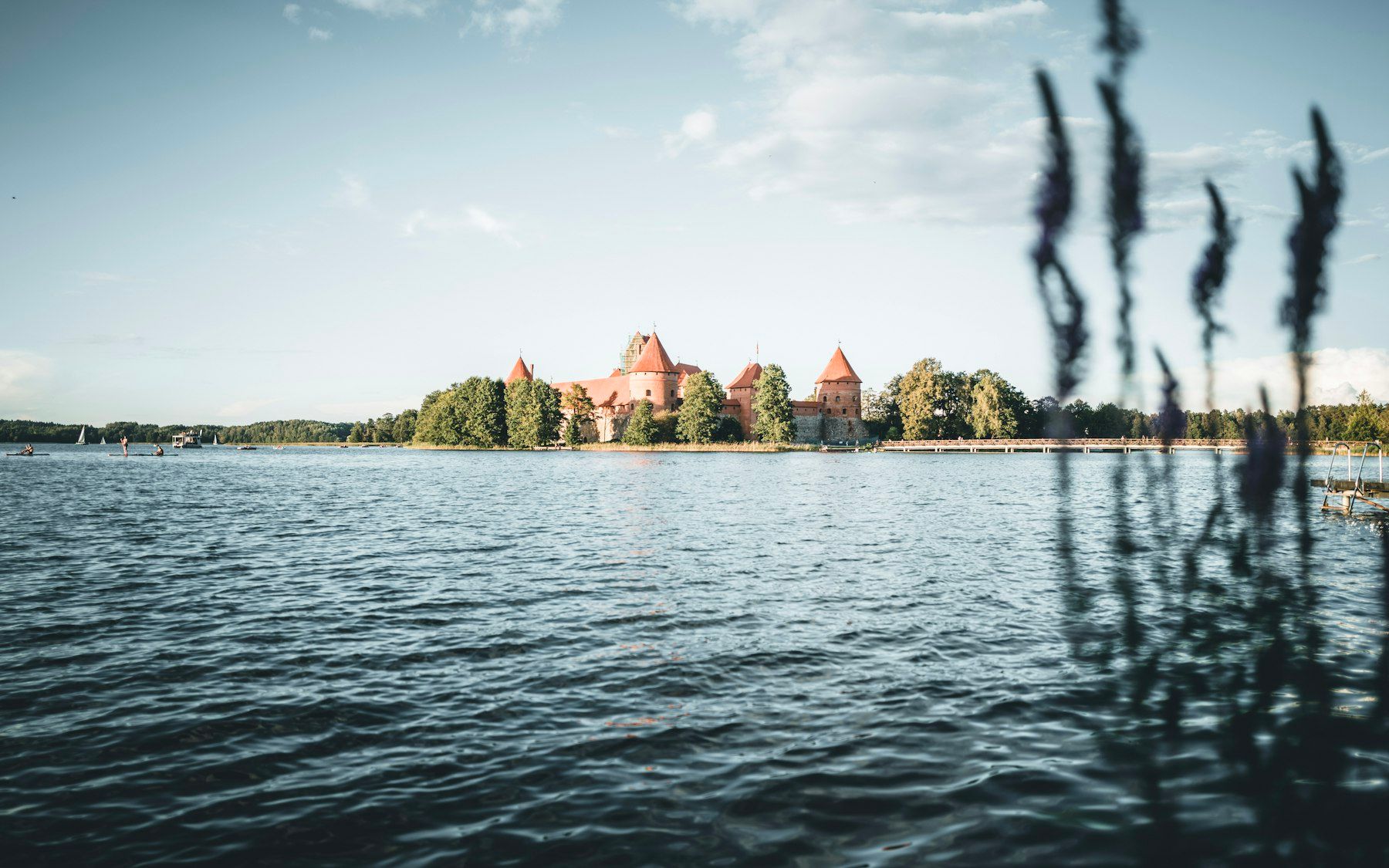
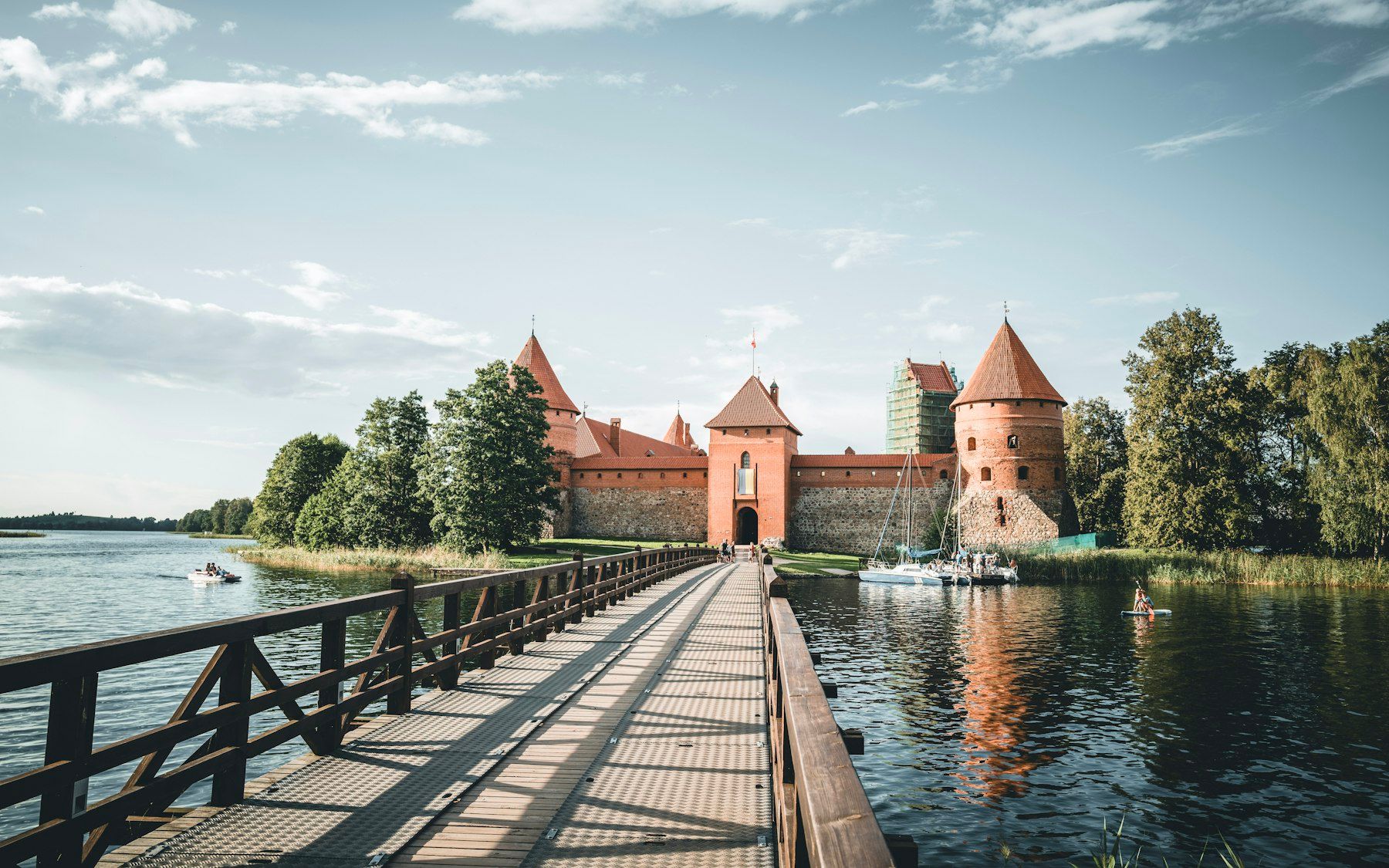
Take a morning train or bus from Vilnius to Trakai, about 30 to 40 minutes. Walk along the lakeside to the red-brick Trakai Island Castle, built on an island in Lake Galvė and reached by a wooden footbridge. The castle houses a history museum. Karaite kibinai, baked pastries filled with meat or vegetables, are the local snack here, and a veg filling is usually on the menu. Hire a rowing boat on the lake if the weather is warm, then return to Vilnius for the evening.
Day 3: Užupis and Vilnius’s other side
Cross the river to Užupis, a small artists’ quarter that declares itself a republic each 1 April, with a constitution written on a wall in many languages. Then climb Gediminas Hill or Three Crosses Hill for the old town’s roofs and spires. Spend the afternoon on the baroque churches, such as St Anne’s and the Church of St Peter and St Paul, or in the Vilnius Cathedral square. Keep the evening free for the Town Hall area’s cafés.
Day 4: Kaunas
Take an early train to Kaunas, roughly an hour from Vilnius. Kaunas was Lithuania’s capital between the world wars, and its modernist buildings carry a UNESCO World Heritage listing. Walk Laisvės alėja, the pedestrian boulevard, then the old town to the confluence of the Nemunas and Neris rivers. Visit the Ninth Fort or the Devil’s Museum if you have the time. Stay the night in Kaunas, then continue west.
Day 5: the Curonian Spit
Take a train or bus from Kaunas to Klaipėda, the coastal port, which takes a few hours, then the short ferry across to the Curonian Spit, a thin sand strip that is a UNESCO World Heritage site. Stay in Nida, a fishing village with dunes the size of small hills. Climb the Parnidis Dune for the view over the lagoon and the Baltic sea, then walk the beach. In summer, a swim is possible, though the Baltic stays cool. Smoked fish is the local speciality, and veg travellers can find potato dishes and salads in the cafés.
Day 6: fly home
Take a morning bus or train back to Vilnius or Kaunas, whichever your onward flight leaves from, and check the timetable the day before. Arrive at the airport three hours before an international flight.
Lithuania for vegetarians and Jain travellers
Vilnius and Kaunas have a steady number of vegetarian and vegan cafés, and many menus mark vegetarian options. Local dishes to look for are cold beetroot soup (šaltibarščiai, made with kefir), potato pancakes, cepelinai with a mushroom or curd filling, and curd cheese pancakes. Traditional restaurants use bacon and pork fat widely, so ask before you order. Strict Jain travellers will find onion and garlic hard to avoid, so carry dry snacks and use a kitchen for a few meals.
Best time to go
June to August gives long days and warm weather, and it is the only practical time for the Curonian Spit’s beaches. May and September are cheaper and quieter, with autumn colour in early September. December has Christmas markets in Vilnius’s old town but short, cold and wet days. If you cannot travel in summer, drop the coast and add a night in Vilnius.
Practical tips
- Money: Lithuania uses the euro. Cards and phone payments work nearly everywhere, and UPI does not. Use a bank ATM rather than airport exchange booths.
- Transport: Vilnius’s old town is walkable, and trains and buses link Trakai, Kaunas and Klaipėda without a car. Book the Nida leg ahead in summer.
- SIM: an eSIM bought before you fly saves queueing at the airport.
- Plugs: Lithuania uses the two-round-pin Type C/F plug at 230 V, so pack an adapter.
- Tipping: about 5 to 10 percent at restaurants is usual if service was good.
- Add-on: Riga is a few hours away by bus, and the same Schengen visa covers Latvia.
- Paperwork: keep your visa, insurance certificate and hotel bookings in one folder.
Related guides
Want another Baltic or Schengen trip on the same visa? See the Riga long weekend, the Estonia 5-day plan or the Poland 7-day plan. All facts for Lithuania are on the Lithuania hub.
Frequently asked questions
Do Indians need a visa for Lithuania?
Yes. Indian passport holders need a Schengen short-stay visa (type C) for tourism. VFS Global's Lithuania India page says applications go through the Lithuania Visa Application Centre in India, with the Embassy of Lithuania in New Delhi handling the visa section, and that Schengen applications are also filed online at migracija.lt. The visa allows up to 90 days in any 180-day period across the Schengen area.
How much is the Lithuania Schengen visa fee for Indians?
The VFS Global Lithuania India page lists €90 for adults and €45 for ages 6 to 12 for tourism, and a VFS service charge of €17.90 (₹1,980 including GST) for applicants aged 12 and above, with none for children under 12. The page gives no rupee figure for tourist visas and says rupee amounts follow the exchange rate. Fees are non-refundable if the visa is refused.
How long does a Lithuania visa take from India?
VFS says the standard processing time is 15 calendar days from arrival at the embassy's visa section, and it can extend to 30 days. You can apply up to six months before travel. Allow four to six weeks from booking an appointment to getting the passport back.
Is 6 days enough for Lithuania?
Yes for a first visit. Three days cover Vilnius and Trakai, one goes to Kaunas, and two to the Curonian Spit on the coast. With only four days, drop the coast and keep Vilnius, Trakai and Kaunas, which are all within about an hour or two of each other.
How much does a Lithuania trip cost from India?
Roughly ₹1.1 to ₹1.55 lakh per person for six days, sharing a mid-range room, including return flights from Delhi or Mumbai, the visa and service fee, local transport, food and tickets. Flights in June to August and over Christmas are the biggest swing.
Can vegetarians and Jains eat well in Lithuania?
Vegetarians can, especially in Vilnius and Kaunas, which have vegetarian and vegan cafés. Traditional Lithuanian cooking is heavy on pork, but potato dishes, cold beetroot soup, curd cheese pancakes and mushroom dishes are meat-free. Strict Jain food needs self-catering, as onion and garlic are widely used.
Can I use UPI in Lithuania?
No. Lithuania uses the euro and UPI is not accepted at shops or restaurants. Cards and phone payments work almost everywhere, so a forex card or an international-enabled debit card is enough, with a little cash for small stalls and public toilets.
What is the best time to visit Lithuania?
June to August has the long days and warmest weather, and is the only sensible time for the Curonian Spit beaches. May and September are cheaper and quieter. December has Christmas markets in Vilnius, but days are short, cold and often wet.