Published 11 Oct 2026
South Korea is a good first East Asian trip for Indians who want a city with history and a food scene: Seoul for palaces and the DMZ, then a train to Busan and Gyeongju. Seven days costs roughly ₹98,000 to ₹1.4 lakh per person, and the visa is a paper application, so file it three to four weeks before you fly.
Visa and entry rules for Indians
Indian passport holders need a visa for mainland South Korea. The tourist category is the short-term visit visa (C-3-9). The Korean consulate in Chennai tells Indian applicants that every application must go through the Korean Visa Application Center operated by VFS Global, and that incomplete applications are not accepted at the counter. We checked the consulate’s pages and the Korea Visa Portal on 11 October 2026.
- Fee: the consulate’s notice, effective 1 June 2025, lists ₹3,400 (US$40) for a single-entry visa of up to 90 days and ₹5,950 for express processing, using a rate of US$1 = ₹85. It says to contact VFS for related queries, and VFS adds its own service charge, which the notice does not give.
- Where to read the rules: the checklist and form are on the Korea Visa Portal, and the consulate’s “for Indian applicants” pages point there.
- Processing time: the consulate pages we could read give no figure for standard processing. Allow at least two to three weeks and do not book non-refundable flights before you have the visa.
- If refused: the consulate says you may reapply only three months after the refusal, and the decision rests with the consulate.
- K-ETA: this is a pre-travel authorisation for visa-exempt nationalities. India is not on the exemption list, so ignore sites that claim to issue a K-ETA to Indians.
- e-Arrival Card: fill in the free online form at e-arrivalcard.go.kr after your visa is issued. The official page says filing opens three days before arrival.
What about Jeju?
Jeju Island has a separate, limited waiver for some visa-required nationalities, and Indian passports are covered. The Indian Embassy in Seoul’s advisory of 24 February 2026 says the waiver does not guarantee entry, that you should carry printed copies of a return ticket, a hotel booking for the whole stay, a day-wise itinerary, proof of funds, a passport valid for six months and accommodation contacts, and that leaving Jeju for the mainland without a visa is illegal. This trip is built around Seoul and Busan, so it uses the normal visa.
Apply only through VFS or the consulate. The consulate itself warns about counterfeit Korea visa portal websites.
What it costs in rupees
Per person, two sharing a room, mid-range. These are our estimates and move with the won (roughly ₩16 to ₹1; check the day’s rate).
| Item | Approx. cost |
|---|---|
| Return flight, Delhi or Mumbai to Seoul (Incheon) | ₹42,000 – ₹58,000 |
| Visa: consulate fee ₹3,400 plus VFS service charge | ₹4,500 – ₹5,500 |
| Hotels, 6 nights, shared room | ₹20,000 – ₹32,000 |
| KTX Seoul–Busan return, Busan–Gyeongju, metro and T-money | ₹9,000 – ₹12,000 |
| Food, ₹2,000–3,000 a day | ₹14,000 – ₹20,000 |
| Palaces, DMZ tour, observatories and other entries | ₹5,000 – ₹9,000 |
| eSIM, travel insurance, small extras | ₹3,000 – ₹4,500 |
| Total | ₹98,000 – ₹1,41,000 |
Shopping and skincare are on top of this. If you spend a lot on beauty products, ask about tax refunds at the shop counter, since the amount that qualifies depends on the receipt and the rules at the time.
Day-by-day itinerary
Day 1: arrive in Seoul
Flights from Delhi take about seven and a half hours. Take the AREX airport railway into the city, drop your bags and eat near the hotel. Buy a T-money card at a convenience store and top it up with cash.
Day 2: palaces and old Seoul
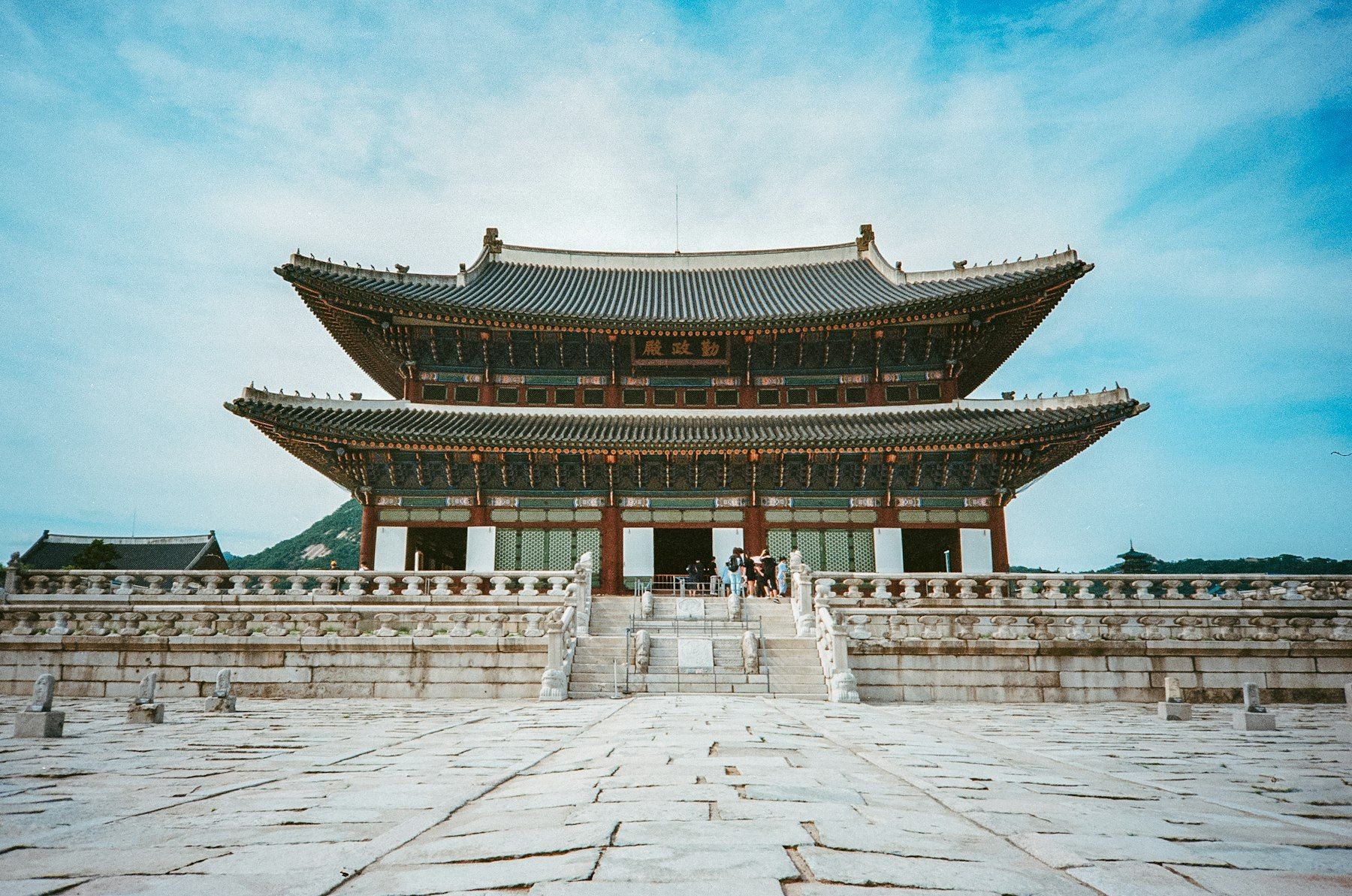
Start at Gyeongbokgung Palace when it opens, to see the changing of the guard before the tour groups arrive. Walk through Bukchon Hanok Village, then to Insadong for tea and traditional crafts. Finish at Cheonggyecheon stream in the evening.
Day 3: the DMZ
Book a half-day or full-day tour to the Demilitarized Zone in advance, since operators check passports before the border. Ask the operator in writing which sites your nationality can enter, because the Joint Security Area has its own restrictions. Spend the evening at Hongdae.
Day 4: markets, a tower and the Han River
Spend the morning in Namdaemun and Myeongdong markets, then take the cable car to N Seoul Tower for sunset. Evening picnics on the Han River with takeaway chicken from a convenience store are a Seoul habit worth copying.
Day 5: KTX to Busan
Take the high-speed KTX from Seoul Station, about two and a half hours. In Busan, see the colourful hillside of Gamcheon Culture Village and walk Haeundae beach in the evening.
Day 6: Gyeongju day trip
Gyeongju, the capital of the Silla kingdom for nearly a thousand years, is under an hour and a half from Busan by train or bus. See Bulguksa temple, the Daereungwon tomb park and Donggung Palace and Wolji Pond lit up at night. Return to Busan or stay over.
Day 7: back to Seoul and fly home
Take a morning KTX to Seoul, leaving a generous gap before an evening flight, or fly from Busan if your airline route allows.
Vegetarian and Jain eating
South Korea is harder for strict vegetarians than Japan or Thailand. Broths often carry fish or anchovy even in kimchi and soups, and “vegetable” dishes may come with meat. Practical options:
- Temple food: Seoul has restaurants serving Buddhist temple cuisine, which is vegan by tradition, though garlic and onion are usually avoided rather than the only restriction.
- Bibimbap: ask for it without meat and egg and check the chilli paste.
- Indian restaurants: Itaewon and Dongdaemun have several, and they are the easy choice for dal and roti.
- Jain food: carry dry snacks and plan your meals; there is no easy local equivalent.
Best time to go
April and early May bring cherry blossom and mild days. September to early November gives clear skies and autumn leaves in the palaces and Gyeongju. June to August is hot and humid, with the monsoon in July, and December to February is cold enough that you need proper winter wear, though Seoul is dry and bright.
Practical tips
- Money: UPI does not work. Carry a Visa or Mastercard that works abroad and some cash for markets and for topping up T-money.
- Maps: Google Maps is limited for walking directions in Korea; install Naver Map or Kakao Map.
- SIM: an eSIM bought before you fly is cheapest and gets you online at Incheon.
- Plugs: Korea uses 220 V with two round pins, so Indian two-pin chargers usually fit.
- Trains: book KTX in advance on weekends and public holidays, when seats sell out.
- Etiquette: take shoes off at hanok guesthouses and temples, and do not tip.
Related guides
Comparing East Asian options? Our Japan cherry blossom plan and Taiwan guide cover two nearby trips, and the Hong Kong 4-day plan is a shorter city break. More facts are on the South Korea hub.
Frequently asked questions
Do Indians need a visa for South Korea?
Yes. Indian passport holders need a visa for mainland South Korea, and the K-ETA is only for nationalities that are already visa-exempt, so it is not open to Indians. Tourists apply for a short-term visit visa (C-3-9) through the Korea Visa Application Centre, which VFS Global runs in India.
How much does the South Korea visa cost for Indians?
The Korean consulate in Chennai publishes ₹3,400 (US$40) for a single-entry visa of up to 90 days, from 1 June 2025, with express processing at ₹5,950. VFS charges a separate service fee on top, so budget roughly ₹4,500 to ₹5,500 in total.
Can Indians travel to Jeju Island without a visa?
Jeju has a limited visa waiver for Indian passports, but the Indian Embassy in Seoul warned in February 2026 that it does not guarantee entry, that you must carry printed bookings and proof of funds, and that leaving Jeju for the mainland without a visa is illegal. For a Seoul and Busan trip you need the normal visa.
How many days are enough for South Korea?
Seven days covers Seoul, a fast train to Busan and a day in Gyeongju without rushing. Five days is workable if you drop Gyeongju. Add a day or two only if you want Jeju or a hiking trip in Seoraksan.
Is South Korea expensive for Indian tourists?
It sits between Japan and Southeast Asia. Meals cost ₹500 to ₹1,000 at ordinary restaurants, the metro and KTX are cheap for what they are, and mid-range hotels in Seoul run ₹6,000 to ₹10,000 a night per room. The flight and the visa are the fixed costs.
Is South Korea good for vegetarians?
It takes planning. Many dishes use fish stock, meat or anchovy broth even when they look vegetable, and English menus rarely flag it. Temple food restaurants in Seoul, bibimbap without meat, and Indian restaurants near Itaewon and Dongdaemun are the reliable options.
What is the e-Arrival Card for South Korea?
It is a free online arrival form on e-arrivalcard.go.kr that replaced the paper card from February 2025. Filing opens three days before you arrive, and you complete it each time you enter Korea.