Published 13 Oct 2026 · Updated 13 Oct 2026
Six days is enough for Oman’s classic loop by road: Muscat, the fort town of Nizwa, a night in the Wahiba Sands and a swim at Wadi Shab. Most Indians need to apply for an eVisa first, and a mid-range trip costs roughly ₹62,000 to ₹1,06,000 per person with two sharing.
Visa and entry rules for Indians
Most Indian passport holders need a visa for Oman before they fly. The Omani Foreign Ministry’s entry visas page, which we checked on 13 October 2026, says the following:
- Visa-free entry is conditional for India. India is in the second, conditional group of countries. You can enter without a visa for up to 14 days only if you hold a valid entry visa for the US, Canada, Australia, the UK, Schengen countries or Japan, or live in a GCC state.
- Requirements for exempt visitors: a passport valid for at least six months, a return ticket, a confirmed hotel booking, health insurance and enough funds for your stay.
- No extension: the 14-day stay cannot be extended or converted into a residence visa.
- Everyone else: the page says the “Tourist Visit Visa (Unsponsored)” is usually the right visa for tourists, and that visas are issued by the Royal Oman Police through its eVisa website, evisa.rop.gov.om, which has an eligibility checker.
What we could not verify: the ROP portal’s visa-type and FAQ pages showed as unavailable when we checked, so we could not read the official fee, validity or processing time. Third-party sites report about OMR 20 for a 30-day tourist eVisa and 1 to 3 working days, but we have not confirmed that, and we have put a placeholder in the cost table. The Foreign Ministry’s page does not list visa-on-arrival terms for Indians, so do not count on one. Apply only through the ROP portal, since look-alike sites charge extra for the same document, and check the passport and document rules there before paying.
What it costs in rupees
Per person, two sharing a room and a hire car, mid-range, six days and five nights. These are our estimates, not quoted fares or rates. The visa line is a placeholder, and it is zero if you qualify for the conditional exemption.
| Item | Approx. cost |
|---|---|
| Return flight, India to Muscat | ₹22,000 – ₹38,000 |
| eVisa (placeholder; ₹0 if exempt, check the ROP fee) | ₹0 – ₹4,600 |
| Hotels, 5 nights (half the room cost) | ₹18,000 – ₹30,000 |
| Hire car for 5 days, fuel and parking (half the cost) | ₹7,000 – ₹11,000 |
| Food, about ₹1,200 – ₹2,000 a day | ₹7,000 – ₹11,000 |
| Desert camp activities, entry fees, boat at Wadi Shab | ₹5,000 – ₹8,000 |
| eSIM, travel insurance, tips | ₹2,500 – ₹3,500 |
| Total | ₹62,000 – ₹1,06,000 |
The low end uses three-star hotels, a small sedan and local restaurants. The high end adds a resort night in the dunes, a 4x4 and peak-season flights from December to February. Hotels are the biggest swing: Oman is not as cheap on rooms as Southeast Asia, so book early for winter.
Getting there and driving
Several Indian and Omani airlines fly direct from Mumbai, Delhi, Kochi, Hyderabad and other metros to Muscat in around three to four hours. We have not listed carriers or fares because they change often, so check airline sites for your dates.
Collect the car at Muscat airport or arrange a car with a driver. Roads between the cities are wide and well maintained, and Omanis drive on the right, so Indian drivers need a day to adjust. Speed cameras are common. Carry your International Driving Permit and licence, check your insurance covers all drivers, and keep fuel above a quarter tank in the interior, since stations thin out between towns.
Day-by-day itinerary
Day 1: arrive in Muscat
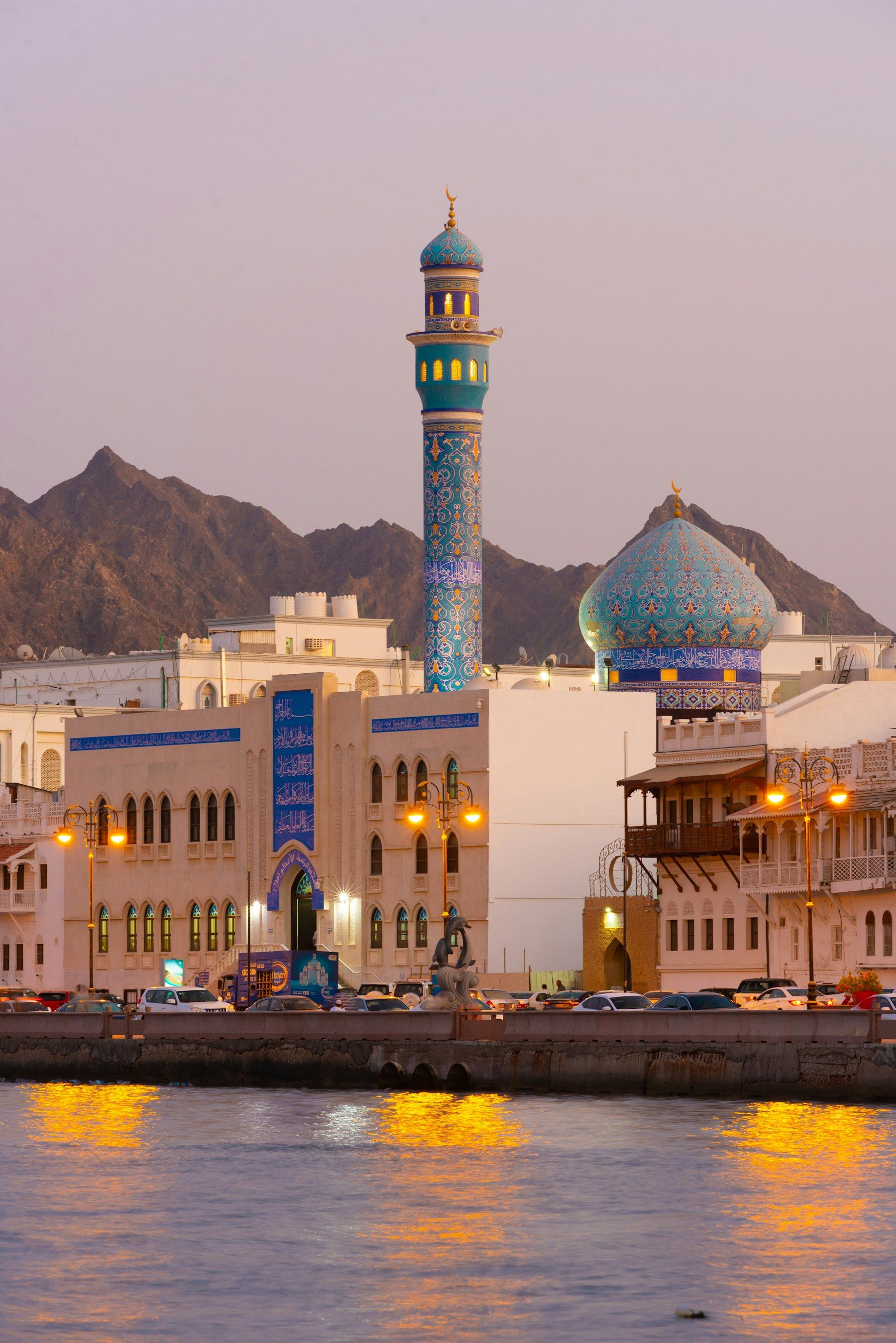
Land, check in and head to the Mutrah corniche for a walk along the harbour at sunset. The blue-domed Al Lawatiya Mosque you see in our photo is in Muttrah, and the nearby souq is a good place for frankincense, dates and silver.
Day 2: Muscat
Visit the Sultan Qaboos Grand Mosque in the morning, since non-Muslim visitors are allowed in set hours and need to dress modestly (shoulders, arms and legs covered, with a scarf for women), and check the current times before you go. Spend the afternoon at the Royal Opera House exterior and the old forts of Al Jalali and Al Mirani, which are visible from the Old Muscat waterfront. Eat a late dinner at a shuwa or fish restaurant.
Day 3: Nizwa
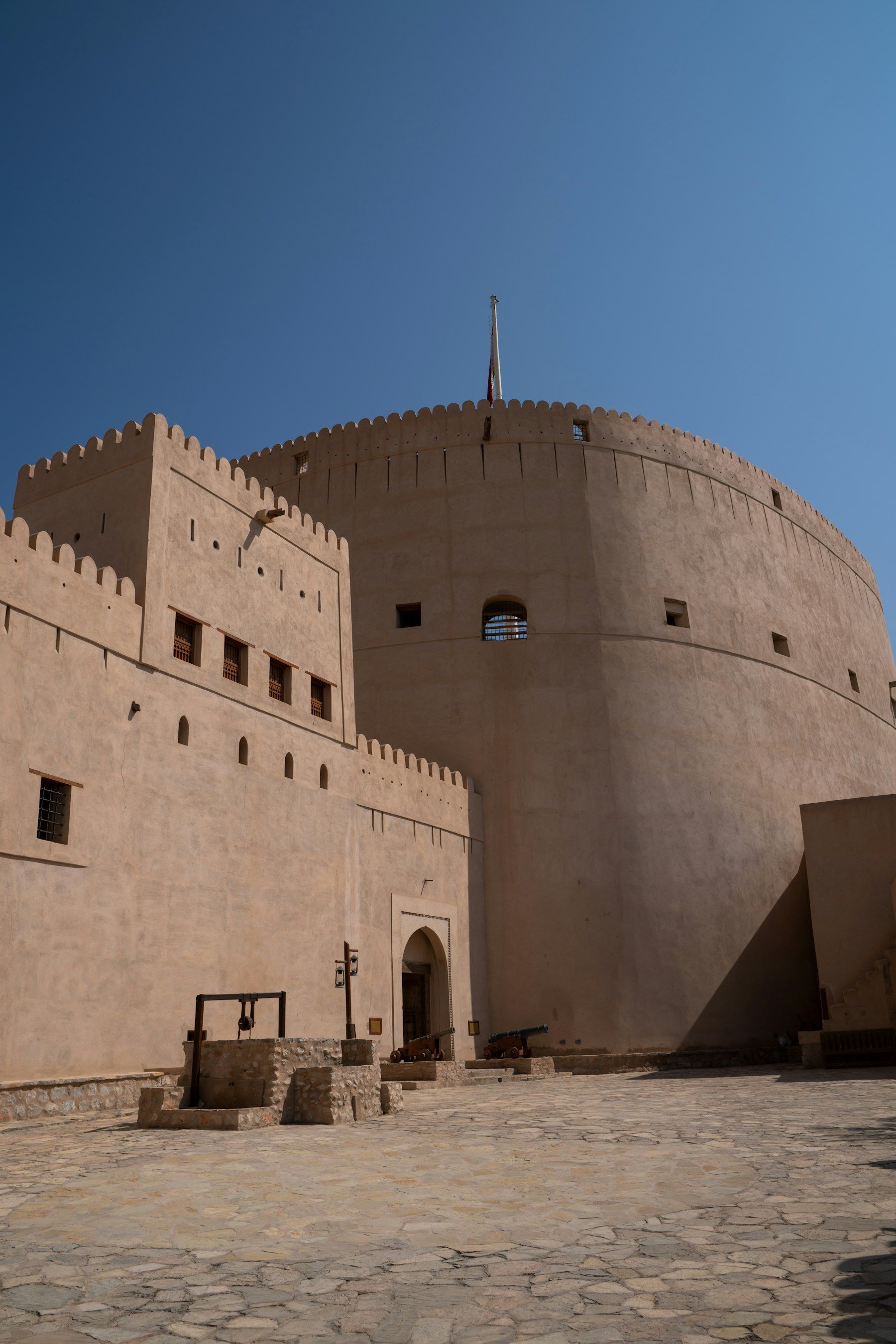
Drive about two hours inland to Nizwa. Climb the round tower of Nizwa Fort and walk the souq, especially the date and silver stalls. If you are there on a Friday morning, the goat market is lively and worth the early start. Overnight in Nizwa.
Day 4: Wahiba Sands
Drive east to the Wahiba Sands. Leave the rental car at the meeting point and take the camp’s 4x4 into the dunes. Ride a camel at the dune ridge, watch the sunset and eat dinner at the camp. Stars are very clear on moonless nights.
Day 5: Wadi Bani Khalid and Wadi Shab
Leave early. Swim at Wadi Bani Khalid on the way, then continue to the coast and Wadi Shab near Tiwi. The walk begins with a short boat crossing, then a 45-minute hike to pools and a cave. Bring water shoes, a dry bag and a change of clothes, and swim in modest clothing. Overnight in Sur, where dhow yards and a lighthouse make a pleasant evening stop.
Day 6: back to Muscat
Drive back to Muscat, about two and a half hours along the coast, stopping at the Bimmah sinkhole if you have time. Return the car at the airport and fly out in the afternoon or evening.
Food for Indian travellers
Omani cooking leans on rice, slow-cooked meat, dates and flatbread, so vegetarians have fewer traditional choices. In every town you will also find Indian restaurants, since Indians make up a large part of Oman’s resident population, so dal, paneer and roti are easy to find, and hotel buffets carry vegetarian options. Jain travellers should carry packaged snacks for the desert day and ask the camp about food in advance. Alcohol is served only in licensed hotels and restaurants.
Best time to go
October to April is the best window, with comfortable days and cool nights. December to February is peak season, so book hotels and the desert camp early. May to September is extremely hot along the coast and inland, and Wadi Shab and desert days become hard work, so avoid this route then.
Practical tips
- Money: the Omani rial is worth a lot per unit, so check the day’s rate and carry a forex card plus a little cash. Do not rely on UPI.
- Connectivity: buy an eSIM before flying, or a local SIM at Muscat airport.
- Plugs: Oman uses the British three-pin plug, so carry an adapter.
- Dress: cover shoulders and knees, especially at mosques and in towns.
- Drones and photos: do not photograph military sites or people without asking, and check drone rules before flying one.
- Weather: flash floods can fill wadis after rain, so skip them when it has rained nearby.
Related guides
For a Gulf trip that pairs well, see our Dubai family trip, and for another desert-and-history route, read our Egypt trip plan. If you would rather stay in one city, our Doha long weekend needs no visa application. Entry rules and facts are collected on the Oman hub.
Frequently asked questions
Do Indians need a visa for Oman?
Usually yes. The Omani Foreign Ministry's entry-visa page, checked on 13 October 2026, lists India in a conditional visa-free group: you can enter for up to 14 days only if you hold a valid visa for the US, Canada, Australia, the UK, a Schengen country or Japan, or are a GCC resident. Everyone else applies for an eVisa on the Royal Oman Police portal, evisa.rop.gov.om, before flying.
How much is the Oman visa for Indians?
We could not read the fee from the official Royal Oman Police portal, because its visa-type page showed as temporarily unavailable when we checked. Third-party sites report about OMR 20 for a 30-day tourist eVisa, but treat that as unconfirmed and see the amount in the portal before paying. The conditional 14-day exemption carries no visa fee.
Is a road trip the best way to see Oman?
Yes, for most first-time visitors. Oman's sights are spread across mountains, desert and coast with little public transport between them, so a hire car with a driver or self-drive gives you Muscat, Nizwa, the dunes and Wadi Shab in one loop. Motorways are good and traffic outside Muscat is light, which makes it easier than most Indian road trips.
Do I need a 4x4 in Oman?
Not for this route. Nizwa, Wadi Shab and Sur are reached on paved roads in a normal sedan or SUV. For the Wahiba Sands, desert camps send a 4x4 to collect you from the edge of the dunes, and you should not drive a rental onto the sand unless the agreement explicitly allows it.
Can I drive in Oman with an Indian licence?
Carry an International Driving Permit along with your Indian licence, and confirm with the rental company before booking, because their requirements differ. We could not find the rule on an official Omani page, so do not rely on this guide. If you would rather not drive, hiring a car with a driver for the loop is common.
What is the best time to visit Oman?
October to April is the comfortable window, with warm days and cool evenings in the mountains and desert. May to September is very hot on the coast and in the interior, though the southern region around Salalah turns green during the khareef monsoon from roughly June to September, which this northern route does not cover.
Can I use UPI or Indian cards in Oman?
Do not plan on UPI. Carry a forex card or an international credit card and a little cash in Omani rials for forts, souqs and wadi car parks. Cards work at hotels and most restaurants, and ATMs are common in towns.