Published 13 Oct 2026
A first trip to Cyprus works best as six days along the south coast: Larnaca, Limassol, a day in the Troodos mountains and two days around Paphos. Budget roughly ₹1.2 to ₹1.7 lakh per person including flights, and apply for the Cyprus visa at least five weeks before you fly. It is a separate visa from the Schengen one.
Visa and entry rules for Indians
Indian ordinary passport holders need a Cyprus short-stay visa before travel. Cyprus is an EU member but is not part of the Schengen area. We checked VFS Global’s Cyprus visa information for India on 13 October 2026, and it says:
- Where to apply: at a VFS Global Cyprus centre in India (the page lists Ahmedabad, Bengaluru, Chandigarh, Chennai, Cochin, Goa, Gurugram, Hyderabad, Jaipur, Jalandhar, Kolkata, Mumbai, Puducherry and Pune). Centres forward applications to the High Commission of Cyprus in New Delhi on the third working day, and some on the fourth or fifth.
- Fee: €90 (INR 9,900 on that page) for adults and €45 (INR 5,000) for children aged 6 to 11. The rupee amount follows the exchange rate and can change without notice. VFS says the fee is not refunded if the embassy refuses the visa.
- VFS service charge: INR 633, GST included.
- Processing: normally 10 to 15 working days at the High Commission, and sometimes longer.
- Stay: each visit up to three months in any half year, counted from first entry. A multiple-entry visa can be valid up to a year, and for some categories up to five.
- Insurance: medical travel insurance of at least €30,000, valid for the whole stay. VFS links an approved insurers list.
- Documents: signed form and two photos, original passport (valid at least three months past the visa, and VFS advises six months from entry), two-way flight itinerary, hotel reservations or host proof, three months of stamped bank statements, three years of tax returns, and an employment letter or explanation. The page also tells you not to buy tickets before the visa is issued.
One thing worth knowing: VFS’s page says a valid multiple-entry Schengen visa lets you enter Cyprus without a Cyprus visa. It says nothing else about conditions, and it does not mention US or UK visas, so confirm with VFS or the High Commission before you fly on it. Without that visa, Indians have no e-visa or visa on arrival for Cyprus that we could find on the official page.
Apply only through VFS Global or the High Commission. Look-alike “Cyprus e-visa” sites charge much more for the same appointment. Book flights on a refundable or flexible fare until the visa is in hand.
Pair Cyprus with another Mediterranean island if you like: Malta and Greece need a Schengen visa, which is a different application. More facts are on the Cyprus hub.
What it costs in rupees
Per person, sharing a mid-range double room, for six days (five nights). These are our estimates for typical fares and rates, and they swing with season. One euro is roughly ₹100 to ₹105, so check the day’s rate.
| Item | Approx. cost |
|---|---|
| Return flights Delhi or Mumbai, one stop | ₹50,000 – ₹72,000 |
| Visa fee (INR 9,900) plus VFS service charge (INR 633) | about ₹10,500 |
| Hotels, 5 nights (half a €90–130 room) | ₹22,500 – ₹34,000 |
| Food, about €35–45 a day | ₹21,000 – ₹28,000 |
| Hire car shared by two, fuel and parking, 4 days | ₹9,000 – ₹14,000 |
| Attractions and a boat trip | ₹4,000 – ₹7,000 |
| Travel insurance, eSIM, small extras | ₹4,000 – ₹6,000 |
| Total | ₹1.2 – ₹1.7 lakh |
A solo traveller pays more per person for the room and the car. Cyprus is a little pricier than a trip to Turkey because the visa and euro prices add up, but cheaper than most of mainland Europe.
Day-by-day itinerary
Day 1: Larnaca
Larnaca’s airport is about 10 minutes from the town. Check in, then walk the Finikoudes palm promenade and the old Church of Saint Lazarus. Late afternoon, drive or take a taxi to the Larnaca Salt Lake and Hala Sultan Tekke, a mosque on the lake shore; flamingos come in winter. Have dinner on the seafront.
Day 2: Limassol
Drive about an hour west on the motorway to Limassol. Walk the old town and the marina, then head west to Kolossi Castle and the Greco-Roman ruins at Kourion, with a theatre looking over the sea. Spend the evening on Limassol’s seafront.
Day 3: Troodos and Omodos
Head north into the Troodos mountains, about 1 to 1.5 hours from Limassol. Stop in the wine village of Omodos with its cobbled square and monastery, then drive up to the cool pine forest around Troodos and a short walk such as the Caledonia Falls trail. Roads are curvy; take it slowly in rain or winter snow. Overnight in Paphos.
Day 4: Aphrodite’s Rock and Paphos
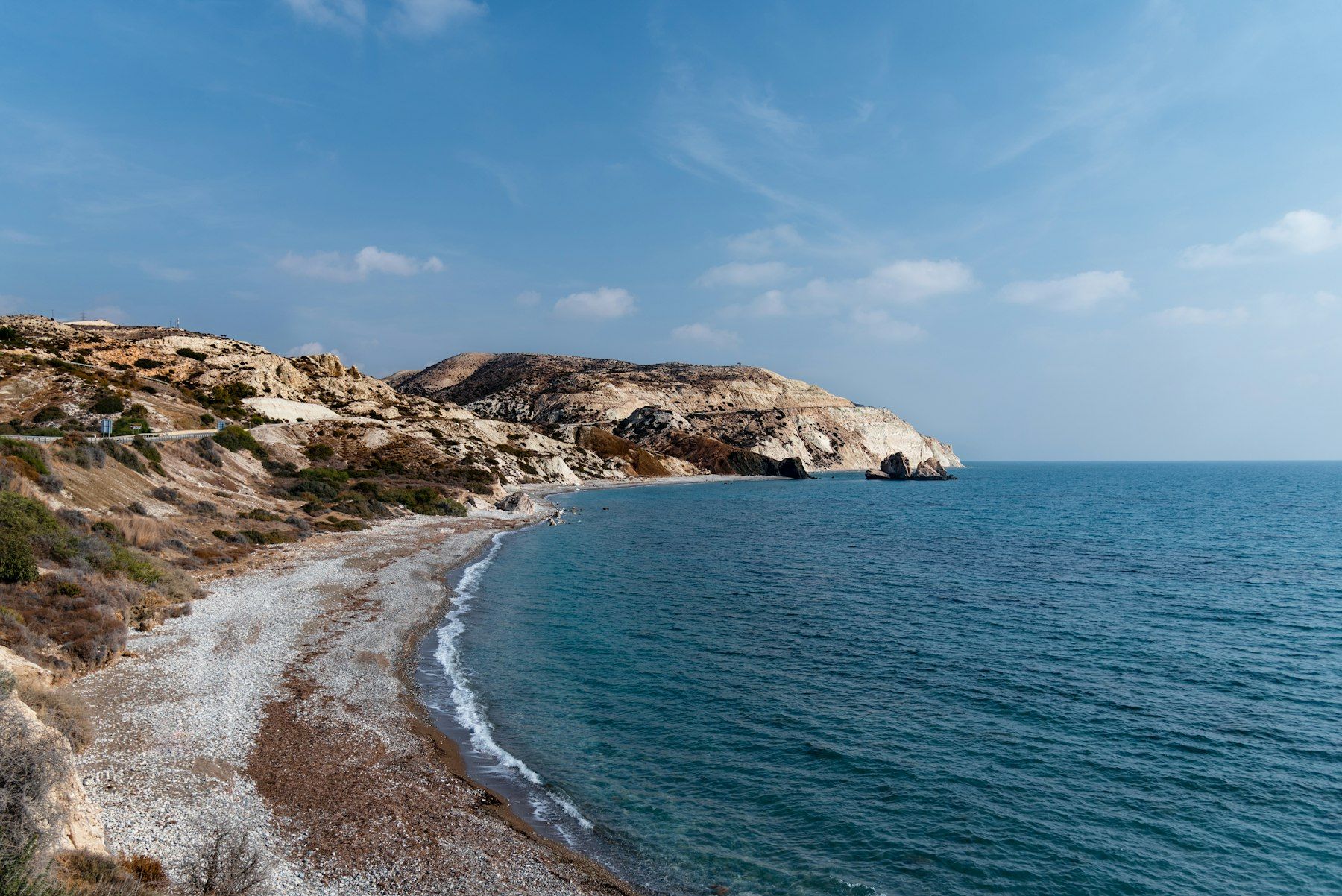
Drive down to the coast and stop at Petra tou Romiou, the rock where Aphrodite is said to have come ashore. Continue to Paphos and see the Paphos Archaeological Park, a UNESCO site with Roman mosaics, before sunset at the harbour.
Day 5: Tombs of the Kings and Akamas
Visit the Tombs of the Kings, rock-cut tombs by the sea, and the Paphos old town. In the afternoon go north to the Akamas peninsula: a boat or jeep trip to the Blue Lagoon, or a walk to the Baths of Aphrodite.
Day 6: Paphos and departure
Spend the morning in the Kato Paphos harbour area or a last beach, then drive about 1 hour 45 minutes back to Larnaca, or fly out of Paphos airport if your ticket allows it. Check whether your airline flies from Paphos before booking an open-jaw ticket.
Eating in Cyprus as an Indian traveller
Vegetarians do well. A meze (many small dishes) has halloumi, salads, hummus, beans and stuffed vine leaves, and meat versions are the other option, so ask for the vegetarian meze. Look for halloumi, koupepia, village salad and fresh bread. Beans and rice dishes may use meat stock. Larnaca, Limassol, Paphos and Ayia Napa have Indian restaurants, and supermarkets are good for cheap lunches.
Best time to go
April to June and September to November are the best months: warm and dry, with a swimmable sea and less crowding. July and August are very hot, often above 35°C inland, and the busiest and priciest. December to March is mild and rainy on the coast with snow on Troodos, a quiet and cheaper season, but sea swims are cold.
Practical tips
- Money: Cyprus uses the euro. Cards and contactless work in most places, UPI does not. Keep cash for village tavernas.
- Driving: Cyprus drives on the left, like India. A hire car is the easiest way to link Troodos and the coast. Check the hire company’s rules on Indian driving licences before you book.
- Public transport: intercity buses link Larnaca, Limassol and Paphos, but villages are poorly served, so check timetables or book a transfer or tour for Troodos.
- Plugs: Cyprus uses the three-pin Type G plug at 230 V, as in the UK. Pack an adapter.
- SIM: an eSIM bought before you fly saves queueing at the airport.
- The north: the northern third of the island is outside the Republic’s control. We did not verify rules for crossing the Green Line with an official source, so ask the High Commission or your hotel before planning a day in North Nicosia.
- Border check: you may be asked for your hotel booking, return ticket and insurance on arrival, so keep them handy.
Related guides
Want another Mediterranean trip? See the Malta 5-day plan, the Greece 8-day plan or the Turkey plan. All facts for Cyprus are on the Cyprus hub.
Frequently asked questions
Do Indians need a visa for Cyprus?
Yes. Indian ordinary passport holders need a Cyprus short-stay visa before travel, applied for through VFS Global for the High Commission of Cyprus in New Delhi. Cyprus is in the EU but not in the Schengen area, so a Schengen visa application does not cover it. VFS says a valid multiple-entry Schengen visa lets you enter without a Cyprus visa.
How much is the Cyprus visa fee for Indians?
VFS Global's Cyprus page for India lists €90 (INR 9,900 on the day we checked) for adults and €45 (INR 5,000) for children aged 6 to 11, plus a VFS service charge of INR 633 including GST. The rupee figure follows the exchange rate, and the fee is not refunded if the visa is refused.
How long does a Cyprus visa take from India?
VFS says the High Commission normally takes 10 to 15 working days and may take longer. Centres outside Delhi forward applications to New Delhi on the third working day or later. Plan for four to five weeks from your VFS appointment, and don't buy a non-refundable ticket before the visa is issued.
Can I enter Cyprus with a Schengen visa?
VFS's Cyprus page says an applicant with a valid, multiple-entry Schengen visa on the passport can enter Cyprus without a visa. It mentions Schengen only, not US or UK visas, and it states no further conditions, so confirm with the High Commission or VFS before relying on it, particularly with a single-entry Schengen visa.
How many days are enough for Cyprus?
Six days covers the south coast: a day around Larnaca, a day in Limassol, a day in the Troodos mountains and two to three days around Paphos. Paphos to Larnaca is about 1 hour 45 minutes by road, so a hire car or a transfer is more useful than buses.
How much does a Cyprus trip cost from India?
Roughly ₹1.2 to ₹1.7 lakh per person for six days, sharing a mid-range room, including return flights from Delhi or Mumbai, the visa, food, a shared hire car and entry tickets. Flights and July and August hotel rates cause most of the swing.
Is Cyprus good for vegetarians?
Yes. Halloumi, a vegetarian meze (salads, hummus, fried halloumi, stuffed vine leaves, beans), village salads and fresh bread are everywhere. Ask about meat stock in beans and rice dishes. Limassol, Larnaca, Paphos and Ayia Napa have Indian restaurants, which helps with Jain or no-onion food.
Can I use UPI in Cyprus?
No. Cyprus uses the euro and UPI is not accepted at shops. Cards and contactless work in most places, but keep some euro cash for village tavernas, small bakeries and parking meters. Use a bank ATM rather than changing money at the airport.